
Best Time to Visit Australia: Sydney, Melbourne, Gold Coast & Month-by-Month Guide (2026)
Jay Vora
Founder & CEO

Best Time to Visit Australia
Australia is not a destination you can understand through one weather forecast.
It is a continent-sized country.
Sydney can be warm while Tasmania feels cool.
The tropical north can be in wet season while southern cities enjoy beautiful summer weather.
The Outback can be scorching at one time of year and surprisingly cold at night during another.
That means the best time to visit Australia depends almost entirely on where you’re going.
For many classic first-time itineraries covering Sydney, Melbourne and the east coast, September to November and March to May are among the most comfortable periods.
But if the Great Barrier Reef, Northern Territory or Tasmania is your priority, the answer changes.
Australia rewards travellers who plan by region.
Understanding Australia’s Seasons



Australia is in the Southern Hemisphere.
That means the seasons are opposite to Europe, North America and much of Asia.
- Summer: December to February
- Autumn: March to May
- Winter: June to August
- Spring: September to November
But because Australia is so large, these seasons feel very different depending on location.
Spring in Australia: September to November
Spring is one of the best seasons for a broad first-time trip.
Temperatures become comfortable.
Flowers bloom.
Cities feel lively without peak-summer intensity.
Spring works especially well for:
- Sydney
- Melbourne
- Road trips
- Couples
- City breaks
- Outdoor sightseeing
Summer in Australia: December to February
Summer is peak season across many southern destinations.
Sydney, Melbourne, coastal towns and beaches become extremely popular.
Expect:
- Long days
- Beach weather
- Festivals
- Outdoor dining
- Major sporting events
The downside is higher prices and crowds.
In parts of tropical northern Australia, summer also overlaps with the wet season.
Autumn in Australia: March to May
Autumn is another excellent period.
Temperatures remain pleasant.
Crowds reduce.
Road trips become easier.
It’s particularly good for:
- Sydney
- Melbourne
- Wine regions
- Scenic drives
- Food travel
Winter in Australia: June to August
Winter varies dramatically.
Sydney stays relatively mild.
Melbourne becomes cooler.
Tasmania can feel properly cold.
Meanwhile, tropical northern Australia can be at its best.
Winter is excellent for:
- Great Barrier Reef
- Northern Territory
- Outback travel
- Whale-watching regions
- Tropical Queensland
Australia Month by Month
January
Peak summer in the south.
Sydney and Melbourne are lively, beaches are busy and major events attract visitors.
Best for: Cities, beaches and summer festivals.
February
Warm conditions continue.
A strong month for coastal holidays, though humidity can be high in some regions.
March
One of the best all-round months.
Summer heat starts easing while outdoor conditions remain excellent.
April
Comfortable weather across many southern destinations.
A fantastic month for city travel and road trips.
May
Autumn deepens.
Temperatures are cooler but still pleasant in many areas.
Crowds reduce further.
June
Winter begins.
Northern Australia becomes increasingly attractive.
A strong month for tropical and Outback travel.
July
Peak winter.
Southern cities are cool, while the tropical north often enjoys dry conditions.
August
Similar to July.
Excellent for northern regions and selected wildlife experiences.
September
Spring returns.
One of the best months for multi-city travel.
October
Excellent conditions continue.
Sydney, Melbourne and coastal regions become increasingly lively.
November
Warm weather builds toward summer.
This is a strong shoulder-season month before peak holiday crowds.
December
Festive season and peak summer travel.
Expect high demand in Sydney and coastal destinations.
Book well in advance.
Best Time Based on Your Travel Style
First-Time Visit
March to May, September to November
Sydney



September to November, March to May
Melbourne
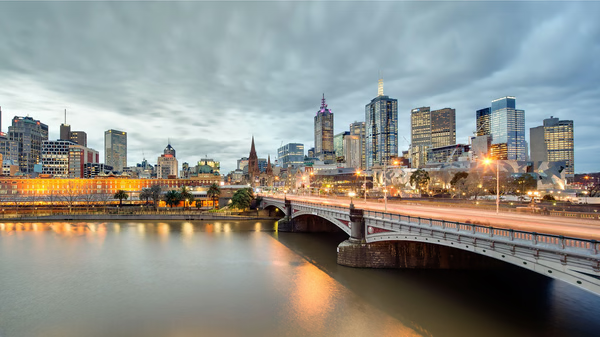


March to May, September to November
Gold Coast
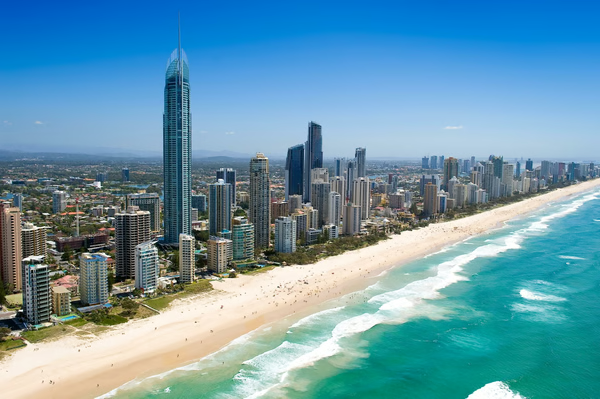
April to May, September to November
Great Barrier Reef
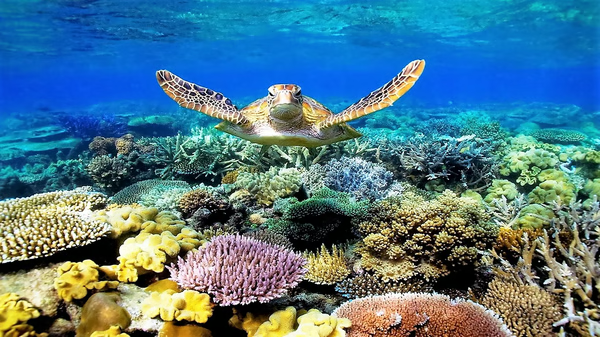

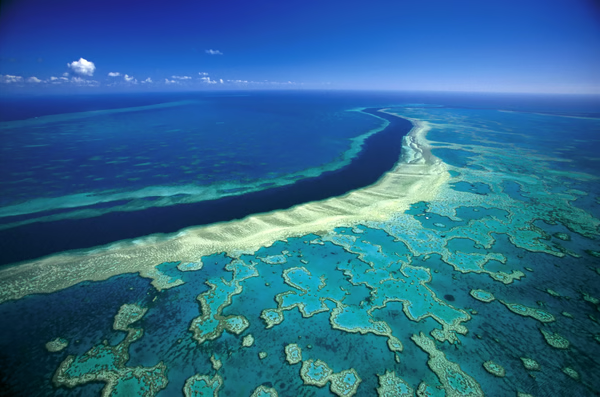
June to October
Northern Territory
May to September
Tasmania

December to March
Road Trips
Spring and autumn
Beaches
December to March in southern regions
Sydney
Sydney is one of the world’s most instantly recognisable cities.
Highlights include:
- Sydney Opera House
- Harbour Bridge
- Bondi Beach
- The Rocks
- Manly
- Darling Harbour
The city works especially well in spring and autumn when outdoor sightseeing is comfortable.
Sydney Harbour
Sydney Harbour is the heart of the city.
Walking around Circular Quay gives you some of the best views of both the Opera House and Harbour Bridge.
For first-time visitors, a ferry ride to Manly is one of the easiest ways to appreciate the harbour from the water.
Melbourne
Melbourne feels very different from Sydney.
It is more focused on:
- Cafés
- Culture
- Laneways
- Food
- Sport
- Art
The city’s weather can change quickly, so layers are useful even during warmer months.
Great Ocean Road
The Great Ocean Road is one of Australia’s classic scenic drives.
Expect:
- Ocean cliffs
- Beaches
- Forests
- Rock formations
- Small coastal towns
The Twelve Apostles are the most famous stop, but the drive itself is the real attraction.
Atlas Insider Tip
Don’t try to do the Great Ocean Road as a rushed return trip if you have enough time.
Stay overnight.
The route becomes much more enjoyable when you can stop without watching the clock.
You’ll also get better light at major viewpoints early in the morning or around sunset.
Gold Coast
The Gold Coast is famous for:
- Beaches
- Theme parks
- Surfing
- Resorts
- Family holidays
It works especially well for families and travellers who want an easy coastal break.
Brisbane
Brisbane has become much more than a stopover.
The city offers:
- Riverfront dining
- Parks
- Cultural precincts
- Easy access to Queensland attractions
It is also a useful gateway to the Gold Coast and Sunshine Coast.
Great Barrier Reef
The Great Barrier Reef is one of Australia’s great natural wonders.
Popular access points include Cairns and Port Douglas.
Travellers come for:
- Snorkelling
- Diving
- Reef cruises
- Scenic flights
Dry-season conditions from roughly June to October are especially popular.
Cairns
Cairns is one of the main gateways to the reef.
It also connects easily to:
- Daintree Rainforest
- Port Douglas
- Atherton Tablelands
This makes it a strong base for tropical North Queensland.
Daintree Rainforest
The Daintree is one of the oldest tropical rainforests on Earth.
Here, rainforest meets reef.
It is an excellent addition to a Great Barrier Reef itinerary.
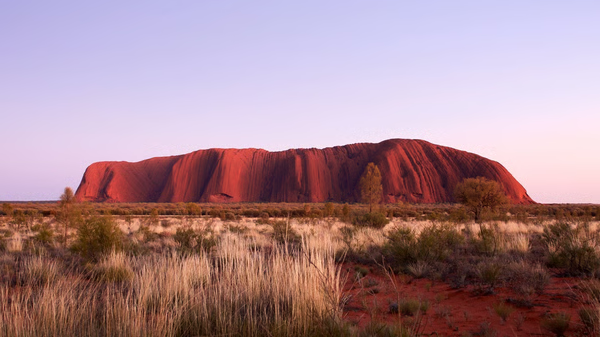
Uluru
Uluru is one of Australia’s most culturally significant landscapes.
It is best experienced with respect for its Aboriginal heritage.
May to September generally provides more comfortable temperatures for outdoor exploration.
Summer can be extremely hot.
The Outback
The Australian Outback is vast.
It is not one destination.
It can mean:
- Red desert
- Remote highways
- Aboriginal cultural experiences
- Cattle stations
- National parks
Travellers should prepare carefully for long distances and remote conditions.
Tasmania
Tasmania offers a completely different version of Australia.
Expect:
- Mountains
- Forests
- Wildlife
- Coastal scenery
- Food and wine
Summer from December to March is especially popular.
Australia for Families
Australia is an excellent family destination.
Popular choices include:
- Sydney
- Gold Coast
- Great Barrier Reef
- Theme parks
- Wildlife parks
The main challenge is distance.
Avoid trying to cover too much in one trip.
Australia for Honeymooners
Australia can make an excellent honeymoon for couples who want variety.
A trip could combine:
Sydney → Melbourne → Great Barrier Reef
or
Sydney → Tasmania
The experience is much more dynamic than a single-resort holiday.
Wildlife Experiences
Australia is famous for its wildlife.
Depending on region, travellers may encounter:
- Kangaroos
- Koalas
- Wombats
- Penguins
- Marine life
Always choose responsible wildlife experiences.
Avoid attractions that encourage unnecessary handling or stress to animals.
What Should You Eat in Australia?
Australia’s food scene is extremely diverse.
Try:
Flat White
A coffee style strongly associated with Australian café culture.
Meat Pie
A classic casual snack.
Barramundi
A popular Australian fish.
Lamington
A sponge cake coated in chocolate and coconut.
Modern Australian Cuisine
Major cities combine Asian, Mediterranean and local influences exceptionally well.
Vegetarian Travel in Australia
Vegetarian and vegan travel is very easy in major cities.
Sydney and Melbourne have excellent plant-based restaurant scenes.
Even smaller towns generally offer options.
How Many Days Do You Need in Australia?
5 to 7 Days
One city + nearby region
10 Days
Sydney + Melbourne or one city + reef
12 to 14 Days
Ideal for three major regions
3 Weeks+
Excellent for a broader first journey
For most first-time travellers, 12 to 14 days is a much better starting point than trying to squeeze the country into one week.
Travel Tips Before You Go
- Plan Australia by region, not by country.
- Don’t underestimate flying distances.
- Use domestic flights strategically.
- Carry sun protection.
- Pack layers for southern cities.
- Check regional weather carefully.
- Book peak summer accommodation early.
- Respect wildlife and protected areas.
- Build travel time into your itinerary.
- Avoid trying to “see Australia” in one short trip.
Quick Summary
| Travel Goal | Best Time |
|---|---|
| Overall Best Time | March-May, September-November |
| Sydney | March-May, September-November |
| Melbourne | March-May, September-November |
| Gold Coast | April-May, September-November |
| Great Barrier Reef | June-October |
| Northern Territory | May-September |
| Tasmania | December-March |
| Southern Beaches | December-March |
Frequently Asked Questions
What is the best month to visit Australia?
For a classic first trip covering Sydney and Melbourne, March, April, October and November are excellent choices.
How many days are enough for Australia?
Around 12 to 14 days is a good first-trip duration if you want to visit several regions without rushing excessively.
Is December a good time to visit Australia?
Yes, particularly for Sydney, Melbourne and southern beach destinations. It is also peak holiday season, so prices and crowds rise.
Is Australia expensive?
Australia can be expensive for accommodation, dining and domestic travel, although careful planning and apartment-style stays can help manage costs.
Is Australia good for families?
Absolutely. Beaches, wildlife, theme parks and easy city infrastructure make it one of the strongest long-haul family destinations.
Australia or New Zealand?
Choose Australia for cities, beaches, reef experiences, wildlife and greater regional variety.
Choose New Zealand for compact road trips, mountains, lakes and adventure landscapes.
Ideally, give each its own trip.
Continue Exploring on Mindflix Atlas
- Best Time to Visit New Zealand (Coming Soon)
- Australia Travel Guide (Coming Soon)
- Sydney Travel Guide (Coming Soon)
- Great Barrier Reef Guide (Coming Soon)
- The Perfect 14-Day Australia Itinerary (Coming Soon)
- Australia vs New Zealand (Coming Soon)
Australia rewards travellers who stop thinking of it as one destination.
Sydney is one trip.
The reef is another.
The Outback is another again.
And Tasmania can feel like a world of its own.
The smartest way to travel Australia is not to see everything.
It is to choose the right regions, give them enough time and leave something for the next journey.
Mindflix Atlas helps you understand the destination before you book it, so you can travel smarter and experience more.