
Best Time to Visit Austria: Vienna, Salzburg, Hallstatt & Month-by-Month Guide (2026)
Jay Vora
Founder & CEO
Best Time to Visit Austria
Austria is one of those countries where the journey can feel almost too polished to be real.
Vienna gives you imperial palaces, grand cafés and classical music.
Salzburg feels smaller, prettier and framed by mountains.
Hallstatt looks like it was designed specifically for postcards.
And once you leave the cities, Austria opens into alpine lakes, mountain villages, scenic roads and ski resorts.
For most first-time travellers, May to June and September to October are among the best times to visit Austria.
The weather is generally comfortable, landscapes are beautiful and crowds are often easier than in peak July and August.
But Austria also has one of Europe’s strongest winter personalities.
If Christmas markets, snow or skiing are your priority, December to March may be exactly what you want.
Understanding Austria’s Seasons
Austria has four distinct seasons.
Broadly:
- Spring: March to May
- Summer: June to August
- Autumn: September to November
- Winter: December to February
Altitude changes the experience significantly.
Vienna may be mild while mountain areas remain cold or snowy.
So always check conditions for the exact region you are visiting.
Spring in Austria: March to May
Spring begins slowly.
March can still feel wintry.
April becomes more comfortable.
By May, cities and countryside are usually at their best.
Spring is excellent for:
- Vienna
- Salzburg
- Hallstatt
- Road trips
- Lakes
- Photography
- Couples
May is especially strong for first-time visitors.
Summer in Austria: June to August
Summer brings long days and excellent mountain access.
This is a great period for:
- Hiking
- Alpine lakes
- Scenic drives
- Outdoor dining
- Family travel
- Music festivals
July and August are also peak tourist months.
Popular places such as Salzburg and Hallstatt can become very busy.
Autumn in Austria: September to November
September is one of Austria’s best months.
The weather remains pleasant.
Summer crowds ease.
Mountain landscapes begin shifting towards autumn.
October can be beautiful, particularly in cities and countryside.
Autumn works well for:
- Photography
- Road trips
- Vienna
- Salzburg
- Food and wine
- Couples
By November, winter begins arriving quickly.
Winter in Austria: December to February
Austria becomes a completely different destination in winter.
Christmas markets fill the cities.
Ski resorts open.
Mountain villages turn snowy.
Winter is excellent for:
- Christmas markets
- Skiing
- Snow holidays
- Classical music
- Romantic city breaks
December is particularly atmospheric.
Austria Month by Month
January
Deep winter.
Cities are cold and ski resorts are busy.
Best for: Skiing, snow and quieter post-Christmas city breaks.
February
Winter continues.
Excellent for skiing and alpine resorts.
Vienna remains cold but culturally active.
March
A transition month.
Skiing may continue in higher regions while cities slowly enter spring.
April
Weather becomes milder.
Flowers return and city sightseeing becomes more pleasant.
May
One of Austria’s best months.
Comfortable temperatures, green landscapes and manageable crowds.
June
Summer begins.
Days are long and alpine regions become increasingly accessible.
July
Peak summer.
Excellent for hiking and lakes, but expect bigger crowds.
August
Still busy and warm.
One of the strongest months for outdoor mountain travel.
September
Arguably the best all-round month.
Summer weather often lingers while visitor numbers begin easing.
October
Cooler and beautifully atmospheric.
Autumn colour can be especially attractive in rural areas.
November
A quieter transition month.
Weather becomes colder and many rural attractions begin moving towards winter schedules.
December
One of Austria’s most magical months.
Christmas markets, lights, seasonal food and early ski conditions define the experience.
Best Time Based on Your Travel Style
First-Time Visit
May-June, September-October
Vienna
April-June, September-December
Salzburg
May-June, September-December
Hallstatt
May-June, September-October
Austrian Alps
June-September
Skiing
December-March
Christmas Markets
Late November-December
Honeymoon
May-June, September, December
Vienna
Vienna feels grand without becoming chaotic.
It is a city of:
- Palaces
- Museums
- Classical music
- Coffee houses
- Elegant streets
- Historic architecture
Highlights include:
- Schönbrunn Palace
- Hofburg
- St. Stephen’s Cathedral
- Belvedere Palace
- Vienna State Opera
- MuseumsQuartier
Give Vienna at least three nights.
It rewards slower travel.
Vienna’s Coffee House Culture
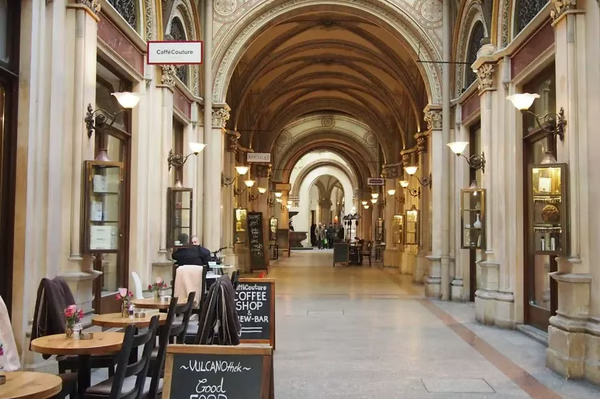
A Viennese coffee house is not just somewhere to grab coffee and leave.
It is a place to sit.
Read.
Talk.
Order cake.
Stay longer than expected.
That slower rhythm is one of the best ways to understand Vienna.
Atlas Insider Tip
Don’t plan Vienna as a sequence of palaces and museums from morning to evening.
Build in one long café stop every day.
Vienna works better when you leave space for the city’s rituals, not just its landmarks.
A coffee and cake break is not lost sightseeing time.
It is part of the sightseeing.
Schönbrunn Palace
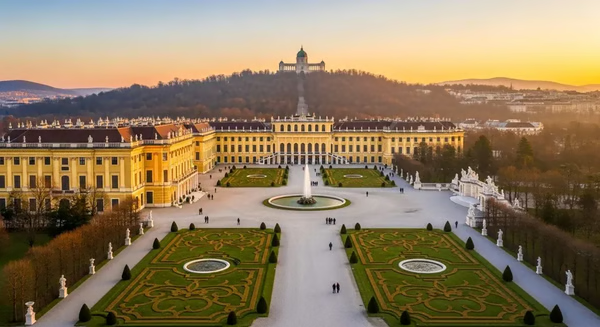
Schönbrunn is one of Austria’s most important imperial sites.
The palace complex is large.
It includes:
- State rooms
- Gardens
- Gloriette
- Grounds
- Additional attractions
Allow more time than you think.
Arriving early also helps with crowd levels.
Salzburg
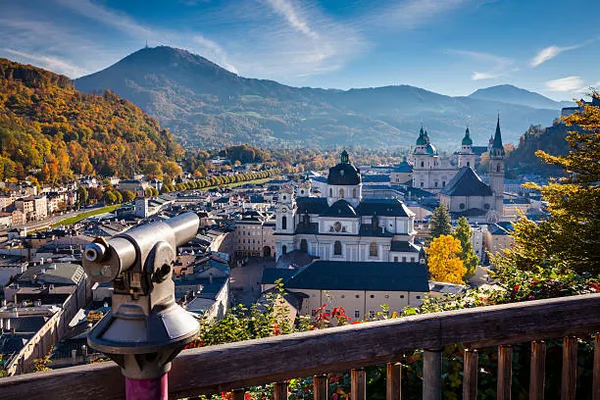
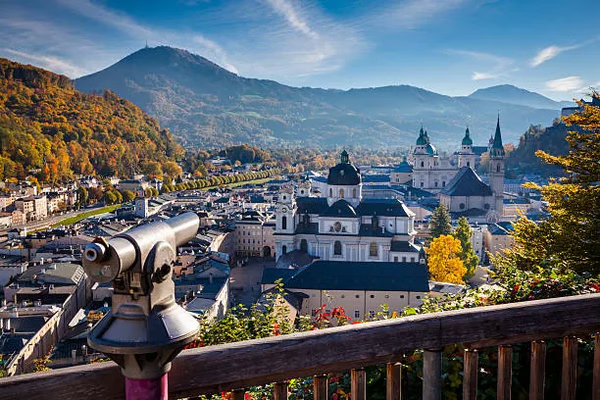
Salzburg is smaller than Vienna and much easier to absorb quickly.
It combines:
- Baroque architecture
- Mountain scenery
- Classical music
- Riverside walks
- Old-town atmosphere
The city is closely associated with Mozart and The Sound of Music, but it is worth visiting even if neither is a major interest.
Hohensalzburg Fortress
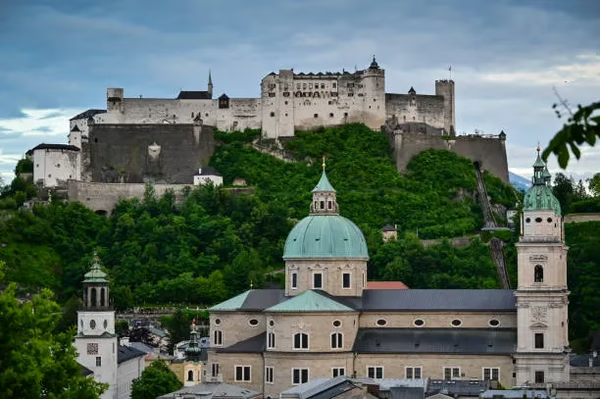
The fortress sits above Salzburg and gives excellent views over the city and surrounding mountains.
Clear weather makes a huge difference.
Late afternoon can be especially atmospheric.
Hallstatt
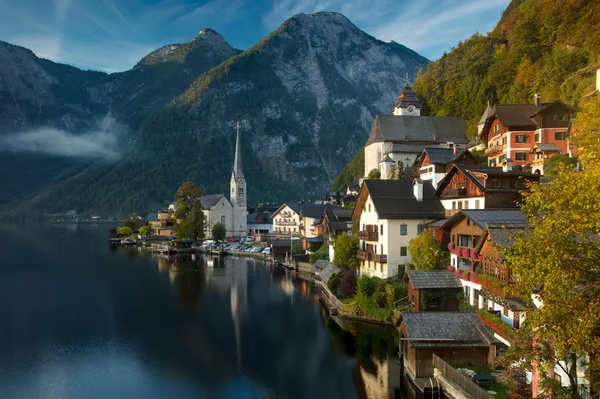
Hallstatt is one of Austria’s most photographed villages.
The setting is undeniably beautiful:
- Lake
- Mountains
- Traditional houses
- Narrow village streets
But popularity has changed the experience.
Day-trip crowds can be intense.
Atlas Insider Tip: Stay Overnight in Hallstatt
If Hallstatt is important to you, do not treat it only as a midday photo stop.
Stay overnight if your itinerary allows.
Early morning and evening are when the village feels completely different.
Day visitors disappear.
The streets quieten.
The lake becomes calmer.
That is when Hallstatt makes the most sense.
The Austrian Alps
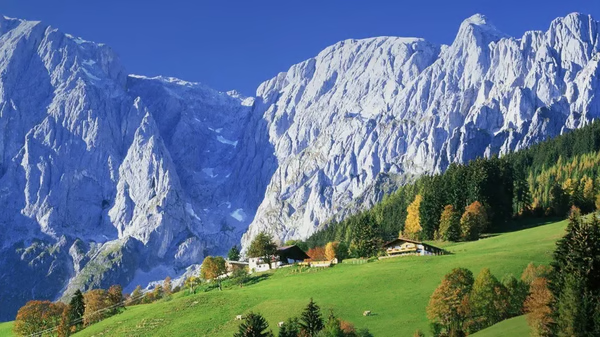
Austria’s alpine regions are among the country’s greatest strengths.
Travellers come for:
- Hiking
- Cable cars
- Lakes
- Scenic roads
- Skiing
- Mountain villages
Regions such as Tyrol and SalzburgerLand deserve more attention than they often get on rushed first trips.
Innsbruck
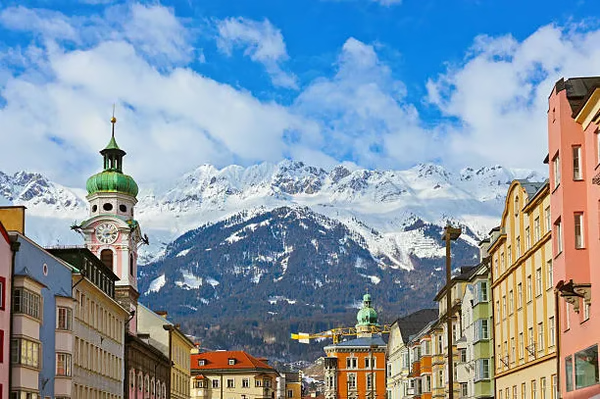
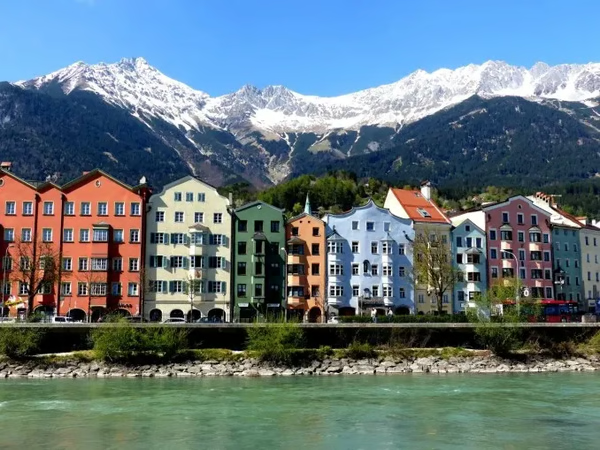
Innsbruck combines city life with immediate mountain access.
It is especially good for travellers who want:
- Alpine views
- Winter sports
- Cable cars
- Historic architecture
The mountains feel incredibly close.
Zell am See
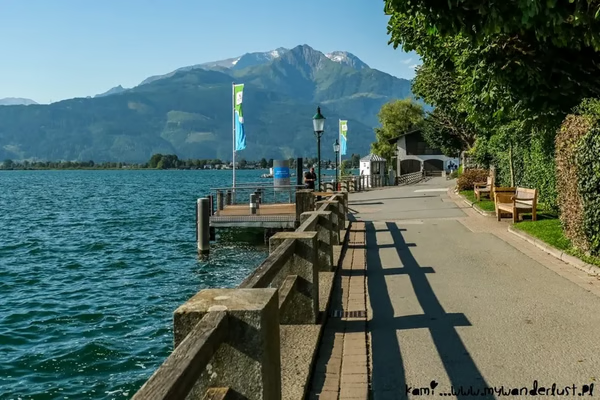
Zell am See combines a mountain lake with alpine scenery.
It works well for:
- Summer hiking
- Lake activities
- Couples
- Scenic stays
Nearby Kaprun adds glacier and mountain experiences.
Austrian Lakes
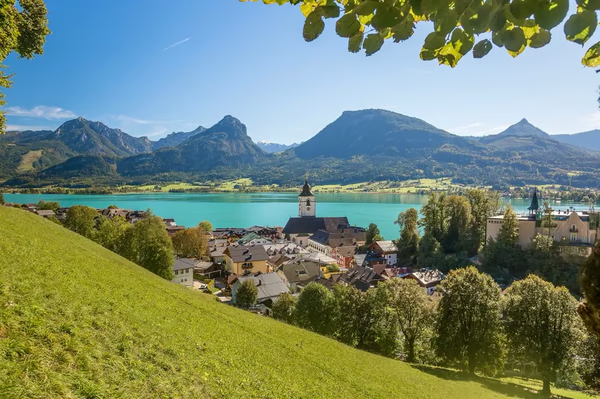
Austria has beautiful lake regions beyond Hallstatt.
Areas around the Salzkammergut offer:
- Swimming
- Boat rides
- Cycling
- Mountain scenery
- Villages
Summer is particularly good for lake travel.
Grossglockner High Alpine Road
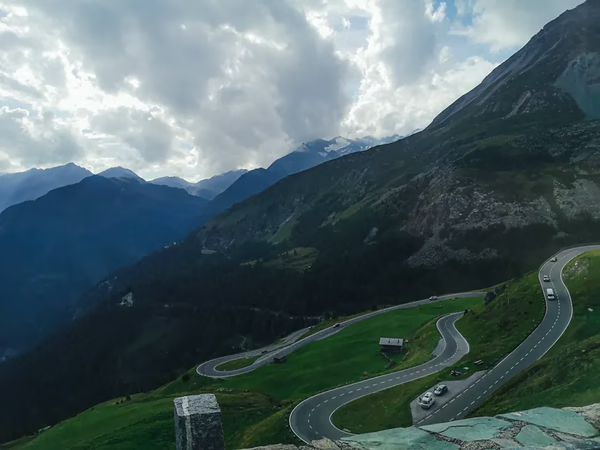
The Grossglockner High Alpine Road is one of Austria’s most scenic drives.
It winds through high mountain landscapes with dramatic viewpoints.
The road is seasonal and typically closes during winter conditions.
Always check current access before planning the route.
Austria in Winter
Austria is one of Europe’s classic winter destinations.
You can build an entire trip around:
- Vienna Christmas markets
- Salzburg
- Snow-covered villages
- Ski resorts
- Classical concerts
- Alpine hotels
Winter is not simply the off-season here.
It is a major travel season in its own right.
Austrian Christmas Markets
Austria’s Christmas markets are among Europe’s most atmospheric.
Vienna and Salzburg are particularly popular.
Expect:
- Lights
- Mulled drinks
- Seasonal sweets
- Crafts
- Decorations
- Festive music
Late November through December is the main period, though exact opening dates vary each year.
Skiing in Austria
Austria is one of Europe’s leading ski destinations.
Popular ski regions include:
- St. Anton
- Kitzbühel
- Ischgl
- Sölden
- Zell am See
The main ski season generally runs through winter, though exact conditions vary by altitude and snowfall.
Austria for Couples
Austria is excellent for couples.
A romantic itinerary might combine:
Vienna → Salzburg → Hallstatt
or
Vienna → Salzburg → Alpine resort
You get:
- Culture
- Mountains
- Lakes
- Cafés
- Scenic trains
- Boutique hotels
It feels romantic without needing to rely on one kind of experience.
Austria for Families
Austria also works extremely well for families.
Good options include:
- Vienna
- Salzburg
- Lakes
- Cable cars
- Mountain villages
Public transport is strong, and many attractions are easy to combine.
Austria by Train
Austria is excellent for rail travel.
Vienna, Salzburg, Innsbruck and many other destinations are well connected.
Train travel lets you avoid:
- Parking
- Long urban drives
- Car-rental logistics
For city-heavy itineraries, you often do not need a car at all.
When Should You Rent a Car?
A car becomes more useful when exploring:
- Rural lakes
- Alpine villages
- Scenic roads
- Multiple countryside stops
A smart strategy is often:
Train between cities → rent a car only for countryside days
This keeps logistics simpler.
What Should You Eat in Austria?
Austrian food is rich, comforting and ideal after a long day outside.
Wiener Schnitzel
Austria’s most famous dish.
Traditionally made with veal, though other versions are common.
Sachertorte
A dense chocolate cake strongly associated with Vienna.
Apfelstrudel
Apple strudel served warm is a classic.
Kaiserschmarrn
A fluffy shredded pancake often served with fruit compote.
Excellent after a day in the mountains.
Knödel
Dumplings appear in many forms across Austrian cuisine.
Vegetarian Travel in Austria
Vegetarian travel is straightforward in major cities.
You’ll find:
- Cheese dishes
- Soups
- Dumplings
- Pasta
- Salads
- Vegetarian versions of traditional dishes
Vienna in particular has a strong modern vegetarian and vegan scene.
In smaller alpine towns, choices can be narrower but are usually manageable.
How Many Days Do You Need in Austria?
4 to 5 Days
Vienna + one nearby excursion
6 to 7 Days
Vienna + Salzburg
8 to 10 Days
Vienna + Salzburg + Hallstatt or Alps
12 to 14 Days
Excellent for a broader road-and-rail trip
For most first-time visitors, 8 to 10 days works beautifully.
A Good First-Time Austria Route
A strong first itinerary could be:
Vienna → Salzburg → Hallstatt
With more time:
Vienna → Salzburg → Hallstatt → Innsbruck
or
Vienna → Salzburg → Salzkammergut → Tyrol
This gives you a much better sense of Austria than staying only in the cities.
Austria vs Switzerland
These two countries are often compared.
Choose Austria for:
- Vienna
- Classical music
- Imperial history
- Christmas markets
- Often better-value alpine travel
Choose Switzerland for:
- Dramatic mountain railways
- Iconic alpine scenery
- Highly polished scenic transport
- Zermatt, Jungfrau and Lucerne
Both are excellent.
Austria often feels more cultural and historic.
Switzerland often feels more intensely landscape-focused.
Travel Tips Before You Go
- Visit in May, June or September for a strong first trip.
- Give Vienna at least three nights.
- Stay overnight in Hallstatt if it really matters to you.
- Book Christmas-season hotels early.
- Use trains between major cities.
- Rent a car selectively for rural regions.
- Check seasonal mountain-road access.
- Pack layers even in summer.
- Don’t spend the entire trip only in Vienna.
- Slow down enough to enjoy Austria’s café culture.
Quick Summary
| Travel Goal | Best Time |
|---|---|
| Overall Best Time | May-June, September-October |
| Vienna | April-June, September-December |
| Salzburg | May-June, September-December |
| Hallstatt | May-June, September-October |
| Austrian Alps | June-September |
| Skiing | December-March |
| Christmas Markets | Late November-December |
| Honeymoon | May-June, September, December |
Frequently Asked Questions
What is the best month to visit Austria?
May, June and September are among the best months for a classic first-time trip.
How many days are enough for Austria?
Around 8 to 10 days is ideal for Vienna, Salzburg and one alpine or lake region.
Is Hallstatt worth visiting?
Yes, especially if you stay overnight or visit early enough to experience it outside the busiest day-trip hours.
Is Austria expensive?
Austria is not cheap, but it can often be more manageable than Switzerland, especially for accommodation and dining outside peak resort areas.
When do Christmas markets start in Austria?
Many begin in the second half of November and continue through December, though exact dates vary by city and year.
Austria or Switzerland for honeymoon?
Choose Austria for culture, historic cities, cafés and alpine scenery.
Choose Switzerland for mountain railways, iconic peaks and highly scenic point-to-point travel.
Both are excellent honeymoon destinations.
Continue Exploring on Mindflix Atlas
- Best Time to Visit Switzerland
- Best Time to Visit Italy
- Best Time to Visit France
- Best Time to Visit Norway
- Best Time to Visit Every Country"
- Austria Travel Guide (Coming Soon)
- Vienna Travel Guide (Coming Soon)
- Salzburg Travel Guide (Coming Soon)
- Hallstatt Travel Guide (Coming Soon)
- The Perfect 9-Day Austria Itinerary (Coming Soon)
- Austria vs Switzerland (Coming Soon)
- Best Christmas Markets in Europe (Coming Soon)
Austria is one of those countries where elegance and nature sit unusually close together.
You can spend the morning inside an imperial palace.
Have cake in a century-old café.
Take a train through the countryside.
And finish the day beside a mountain lake.
That combination is what makes Austria memorable.
Don’t choose between the cities and the Alps.
Build a trip that gives you both.
Mindflix Atlas helps you understand the destination before you book it, so you can travel smarter and experience more.