
Best Time to Visit Egypt: Weather, Nile Cruises & Month-by-Month Guide (2026)
Jay Vora
Founder & CEO

Best Time to Visit Egypt
Egypt is one of those destinations that almost feels too famous to be real.
The pyramids.
The Nile.
The temples of Luxor.
The Valley of the Kings.
The deserts.
The Red Sea.
You arrive knowing the names already.
Then you stand in front of them and realise photographs never quite prepared you for the scale.
But Egypt is also a destination where timing matters.
Summer can be intensely hot, especially in Upper Egypt around Luxor and Aswan.
Winter is much more comfortable for long sightseeing days.
For most travellers, October to April is the best time to visit Egypt, especially if your itinerary includes Cairo, Luxor, Aswan and a Nile cruise.
If you’re heading mainly to the Red Sea, the travel window is broader.
Here is how to choose the right season for your trip.
Understanding Egypt’s Climate
Egypt has a hot, dry desert climate.
Rainfall is limited across much of the country, so the biggest planning factor is temperature rather than precipitation.
Broadly, you can think of the year in two travel seasons:
- Cooler season: October to April
- Hot season: May to September
The further south you travel, the hotter conditions generally become.
That means Cairo may feel manageable when Luxor feels much more intense.
Cooler Season: October to April
This is the prime sightseeing season.
Days are generally warm to mild, while evenings can become surprisingly cool.
It’s the best period for:
- Pyramids
- Luxor temples
- Valley of the Kings
- Nile cruises
- Desert excursions
- Cultural trips
- First-time visitors
December to February are particularly popular.
Hot Season: May to September
Summer in Egypt can be extremely hot.
That’s especially true in Luxor, Aswan and desert regions.
Travel is still possible, but your daily schedule needs to adapt.
The advantages are:
- Fewer tourists
- Potentially better hotel value
- Quieter archaeological sites
- Excellent Red Sea resort weather
If travelling in summer, early mornings become essential.
Egypt Month by Month
January
One of the best months to visit.
Cairo is comfortable, while Luxor and Aswan offer excellent sightseeing conditions.
Evenings can feel cool, so pack a light jacket.
Best for: First-time trips, Nile cruises, historical sightseeing.
February
Excellent weather continues.
This is a strong month for long days exploring temples and ancient sites without extreme heat.
March
Temperatures begin rising but remain comfortable.
Occasional desert winds can occur during spring.
A great month for multi-city itineraries.
April
Still a good time to visit, although afternoons begin feeling noticeably warmer in the south.
Start sightseeing earlier in the day.
May
Summer heat becomes more apparent.
Cairo remains manageable, but Luxor and Aswan can become very hot.
Red Sea resorts remain attractive.
June
One of the hottest months.
If you visit historical sites, go early and plan indoor breaks during midday.
July
Peak heat.
This is not the easiest month for extensive archaeological sightseeing.
However, beach resorts along the Red Sea continue to perform well.
August
Similar to July.
Expect intense heat across inland destinations.
Travellers comfortable with high temperatures may benefit from lower crowd levels.
September
Temperatures gradually begin easing.
Still hot, especially in Upper Egypt, but conditions improve later in the month.
October
One of the best months to return to full sightseeing.
Temperatures become far more comfortable and tourism begins picking up again.
November
Excellent weather.
This is one of the strongest months for combining Cairo, Luxor, Aswan and the Nile.
December
Peak travel season.
Comfortable temperatures and festive-season travel make December extremely popular.
Book well ahead for Christmas and New Year periods.
Best Time Based on Your Travel Style
| Travel Goal | Best Time |
|---|---|
| First-Time Visit | October to April |
| Pyramids & Cairo | October to April |
| Nile Cruise | October to April |
| Luxor & Aswan | November to March |
| Red Sea Holiday | Much of the year, with spring and autumn especially pleasant |
| Desert Experiences | October to March |
| Budget Travel | May to September, if you can tolerate the heat |
| Photography | October to April |
Cairo

Cairo can feel overwhelming at first.
It’s huge, energetic and constantly moving.
But it rewards travellers who give it enough time.
Highlights include:
- Giza Pyramids
- Great Sphinx
- Egyptian Museum collections
- Islamic Cairo
- Khan el-Khalili
- Historic mosques
Two to three nights is a sensible minimum for most first-time visitors.
The Pyramids of Giza
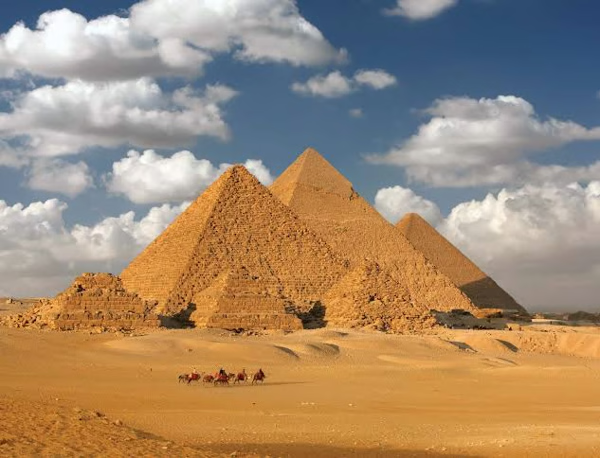
There are few landmarks in the world more recognisable.
And yet seeing the pyramids in person still feels surprising.
They are bigger than expected.
The surrounding area is more complex than photographs suggest.
And the experience can vary dramatically depending on when you arrive.
Go early.
The light is better.
Temperatures are cooler.
Crowds are usually lighter.
And the atmosphere feels much more powerful before the site becomes busy.
Atlas Insider Tip
If the pyramids are one of the main reasons for your trip, visit Giza first thing in the morning.
Avoid leaving it for the afternoon.
You’ll get cooler temperatures, cleaner light for photography and generally a calmer experience.
Also, don’t judge the entire Giza experience by one viewpoint.
Move around the plateau.
The perspective changes completely.
Luxor
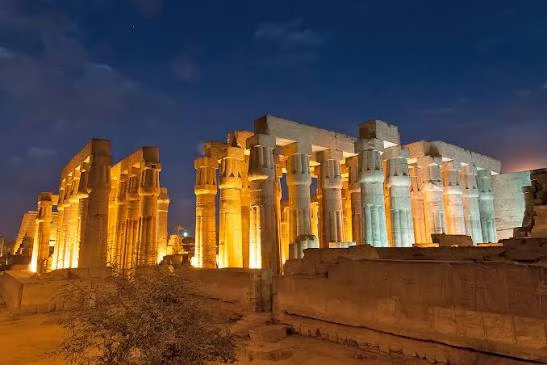
Luxor is one of the greatest historical destinations in the world.
Ancient Thebes once stood here, and today the region contains an extraordinary concentration of temples and tombs.
Key attractions include:
- Karnak Temple
- Luxor Temple
- Valley of the Kings
- Hatshepsut Temple
- Colossi of Memnon
Luxor deserves at least two full days.
Three is even better.
Valley of the Kings
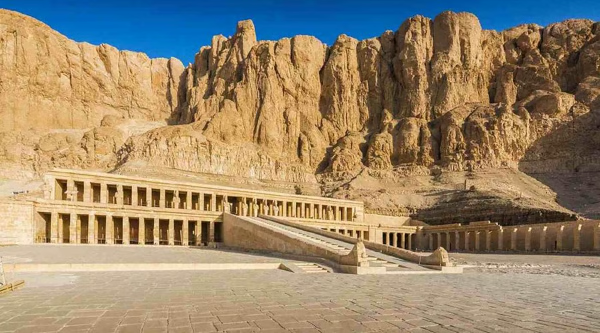
The Valley of the Kings contains royal tombs carved into the desert hills.
The interiors are often the most impressive part.
Brilliant colours survive on walls that are thousands of years old.
Not every tomb is always open, and ticket structures can vary.
Check current access when planning.
Aswan
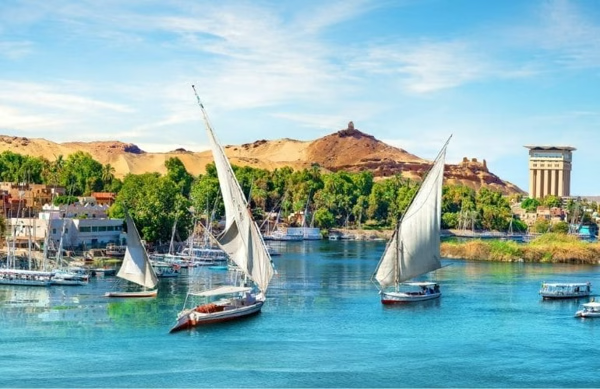
Aswan feels slower and more relaxed than Cairo and Luxor.
The Nile becomes especially beautiful here.
Popular experiences include:
- Felucca sailing
- Philae Temple
- Nubian villages
- Riverfront stays
It also serves as the main base for one of Egypt’s greatest archaeological sites.
Abu Simbel
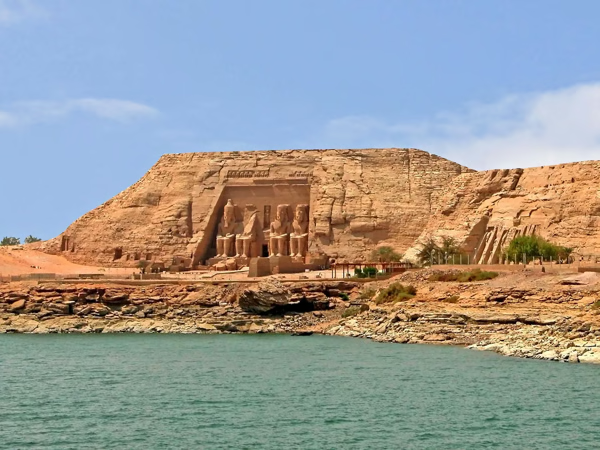
Abu Simbel is one of those places that makes you question how ancient builders achieved what they did.
The two enormous temples were carved into rock during the reign of Ramses II.
They were later relocated in a remarkable modern engineering project to protect them from rising water caused by the Aswan High Dam.
It’s a long journey from Aswan, but for history-focused travellers, it’s worth it.
Nile Cruises
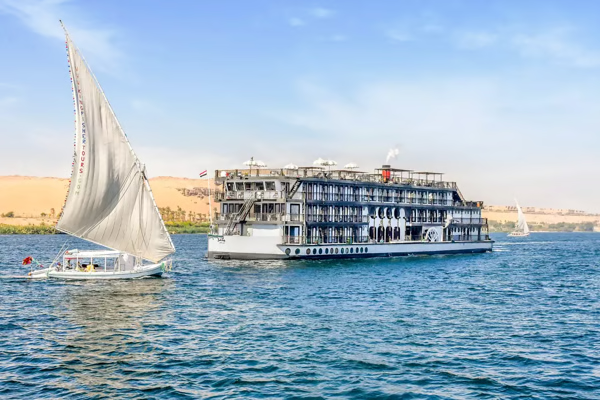
A Nile cruise is one of the most iconic ways to travel between Luxor and Aswan.
Typical cruises combine:
- Comfortable accommodation
- River scenery
- Temple visits
- Guided excursions
The best season is generally from October to April, when daytime temperatures are easier for sightseeing.
Not all cruises offer the same experience.
Check:
- Ship quality
- Cabin size
- Meal plan
- Guide quality
- Included excursions
- Number of nights
- Departure schedule
Red Sea Resorts
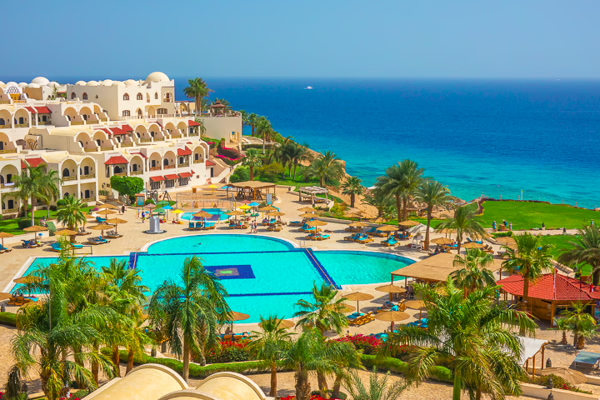
Egypt isn’t only about ancient history.
The Red Sea offers some of the region’s best diving and resort holidays.
Popular destinations include:
- Sharm El Sheikh
- Hurghada
- Marsa Alam
Expect:
- Coral reefs
- Diving
- Snorkelling
- Resorts
- Water sports
These destinations work particularly well if you want to finish a cultural trip with a few slower days by the sea.
Cairo + Nile + Red Sea: A Strong First Trip
A balanced Egypt itinerary might look like:
Cairo → Luxor → Nile Cruise → Aswan → Red Sea
This gives you:
- Ancient history
- City culture
- River travel
- Temples
- Desert landscapes
- Beach relaxation
It’s one of the best ways to avoid feeling overloaded by continuous sightseeing.
Egypt in Summer: Is It Worth It?
Yes, but only if you plan around the heat.
For summer travel:
- Start sightseeing at sunrise or soon after
- Return to the hotel during peak afternoon heat
- Carry water constantly
- Wear breathable clothing
- Use sun protection
- Keep evenings for outdoor exploration
Travellers who dislike extreme heat should avoid Luxor and Aswan during peak summer.
What Should You Wear in Egypt?
Egypt is diverse, but dressing modestly is a sensible approach in many settings.
For sightseeing:
- Lightweight clothing
- Covered shoulders in religious sites
- Comfortable trousers or longer skirts
- Hat
- Sunglasses
- Walking shoes
Women do not generally need to cover their hair outside specific religious settings, but local norms should always be respected.
What Should You Eat in Egypt?
Egyptian food is hearty, comforting and excellent for sharing.
Try:
- Koshari
A famous mix of rice, lentils, pasta, chickpeas and tomato sauce. It’s one of the easiest vegetarian dishes to find. - Ful Medames
Slow-cooked fava beans, often eaten for breakfast. - Taameya
Egypt’s version of falafel, traditionally made with fava beans. - Molokhia
A green soup-like dish with a distinctive texture and flavour. - Fattah
A layered dish commonly prepared for celebrations.
Vegetarian travellers generally have plenty of options. Koshari, ful, taameya, salads, breads and vegetable dishes are widely available.
Strict vegans should still clarify ingredients, particularly regarding butter, stock and dairy.
How Many Days Do You Need in Egypt?
- 4 to 5 Days
Cairo + Giza only. - 7 Days
Cairo + Luxor. - 8 to 10 Days
Cairo + Luxor + Aswan or Nile cruise. - 12 to 14 Days
Ideal for combining history with a Red Sea stay.
For most first-time travellers, 9 to 12 days is an excellent duration.
Travel Tips Before You Go
- Visit outdoor archaeological sites early.
- Carry water at all times.
- Use sun protection even during winter.
- Dress respectfully.
- Hire reputable guides for major historical sites.
- Keep cash in small denominations for minor purchases and tips.
- Allow extra travel time in Cairo traffic.
- Don’t overpack sightseeing into one day.
- Consider ending your trip with a Red Sea stay.
Frequently Asked Questions
What is the best month to visit Egypt?
For most first-time travellers, November, February and March offer excellent sightseeing weather across Cairo, Luxor and Aswan.
Is December a good time to visit Egypt?
Yes. December has comfortable weather, but it is also a popular period, so hotels and cruises should be booked early.
Is Egypt too hot in summer?
Upper Egypt can become extremely hot between June and August. Travel is still possible, but sightseeing should be concentrated in the early morning and evening.
How many days are enough for Egypt?
Around 9 to 12 days works very well for a first journey combining Cairo, Luxor, Aswan and a Nile experience.
Is a Nile cruise worth it?
For many travellers, yes. It combines transport, accommodation and access to several major historical sites while giving you a slower way to experience the Nile.
Egypt or Turkey: which is better for history?
Egypt offers extraordinary ancient Egyptian archaeology and monuments. Turkey offers layers of Greek, Roman, Byzantine, Ottoman and modern history. They’re completely different historical journeys.
Is Egypt good for families?
Yes, particularly for children interested in ancient history. The itinerary should be paced carefully because long sightseeing days and heat can become tiring.
Continue Exploring on Mindflix Atlas
- Best Time to Visit Every Country
- Best Time to Visit Turkey
- Best Time to Visit Dubai
- Best Time to Visit Jordan (Coming Soon)
- Egypt Travel Guide (Coming Soon)
- Cairo Travel Guide (Coming Soon)
- The Perfect 10-Day Egypt Itinerary (Coming Soon)
- Nile Cruise Guide (Coming Soon)
- Egypt vs Jordan: Which Should You Visit? (Coming Soon)
Egypt is one of those journeys where the word “ancient” starts to mean something different.
You walk into temples built thousands of years ago.
Enter tombs where colour still survives on the walls.
Sail the same river that supported one of history’s greatest civilisations.
And stand beside monuments that have watched entire empires disappear.
Come during the right season, slow the itinerary down, and let the scale of the place sink in.
Mindflix Atlas helps you understand the destination before you book it, so you can travel smarter and experience more.