
Best Time to Visit Germany: Berlin, Bavaria, Christmas Markets & Month-by-Month Guide (2026)
Jay Vora
Founder & CEO
Best Time to Visit Germany
Germany is one of those countries that becomes more interesting the moment you stop thinking of it as one destination.
Berlin is creative, complicated and constantly changing.
Munich feels more polished and traditionally Bavarian.
The Rhine Valley is built around castles, vineyards and river towns.
The Black Forest slows everything down.
And in December, cities across the country turn into some of Europe’s most atmospheric Christmas-market destinations.
For most first-time travellers, May to June and September to October are among the best times to visit Germany.
The weather is generally comfortable, cities are lively and travel conditions are easier than during the coldest winter months.
But Germany has several very different peak seasons.
If Christmas markets are your priority, December is the obvious choice.
If Oktoberfest is the reason for the trip, late September becomes far more important than the weather.
Understanding Germany’s Seasons
Germany has four distinct seasons.
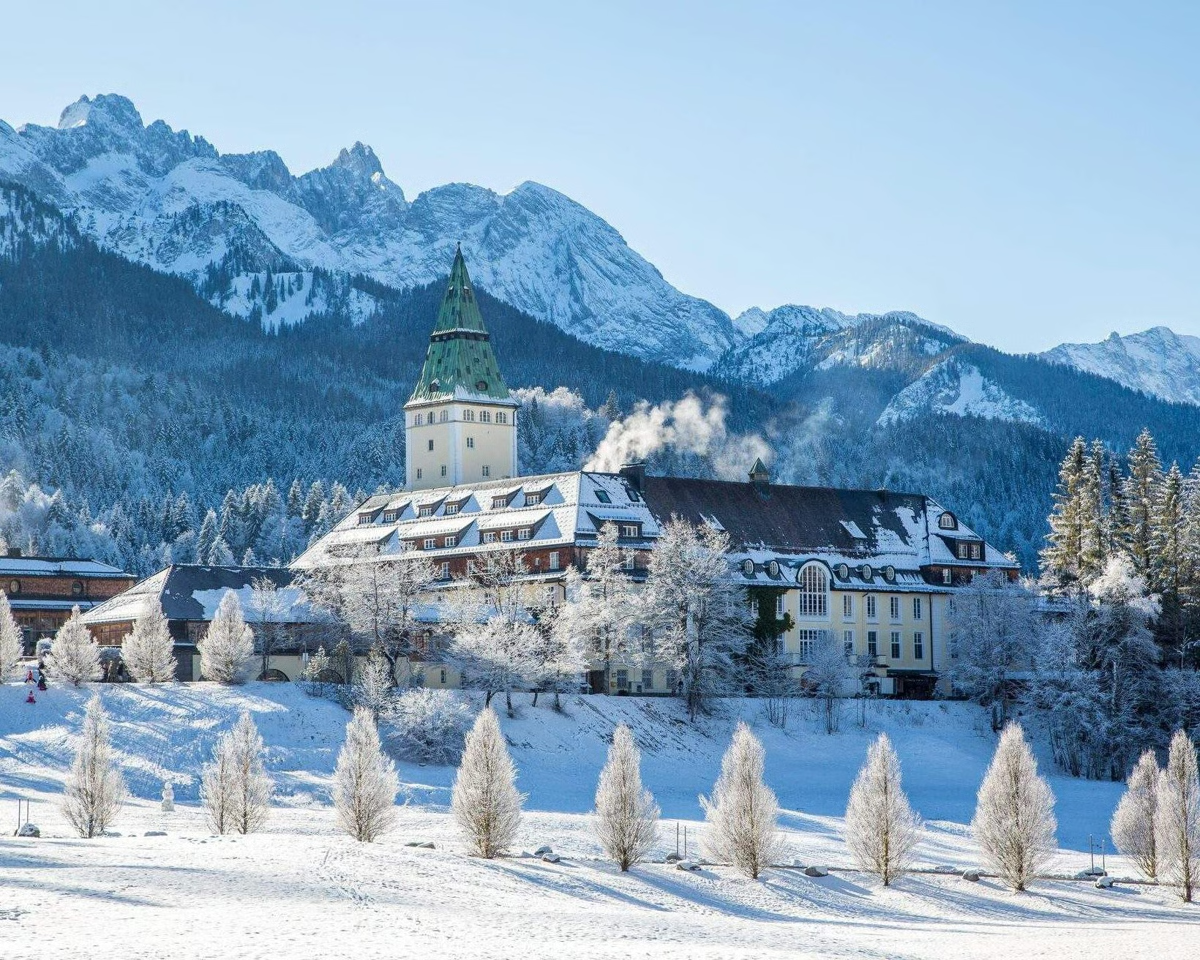
Broadly:
- Spring: March to May
- Summer: June to August
- Autumn: September to November
- Winter: December to February
Northern Germany is influenced more by the coast.
Southern Germany tends to have stronger alpine influences.
Weather can change quickly, so layers are useful almost year-round.
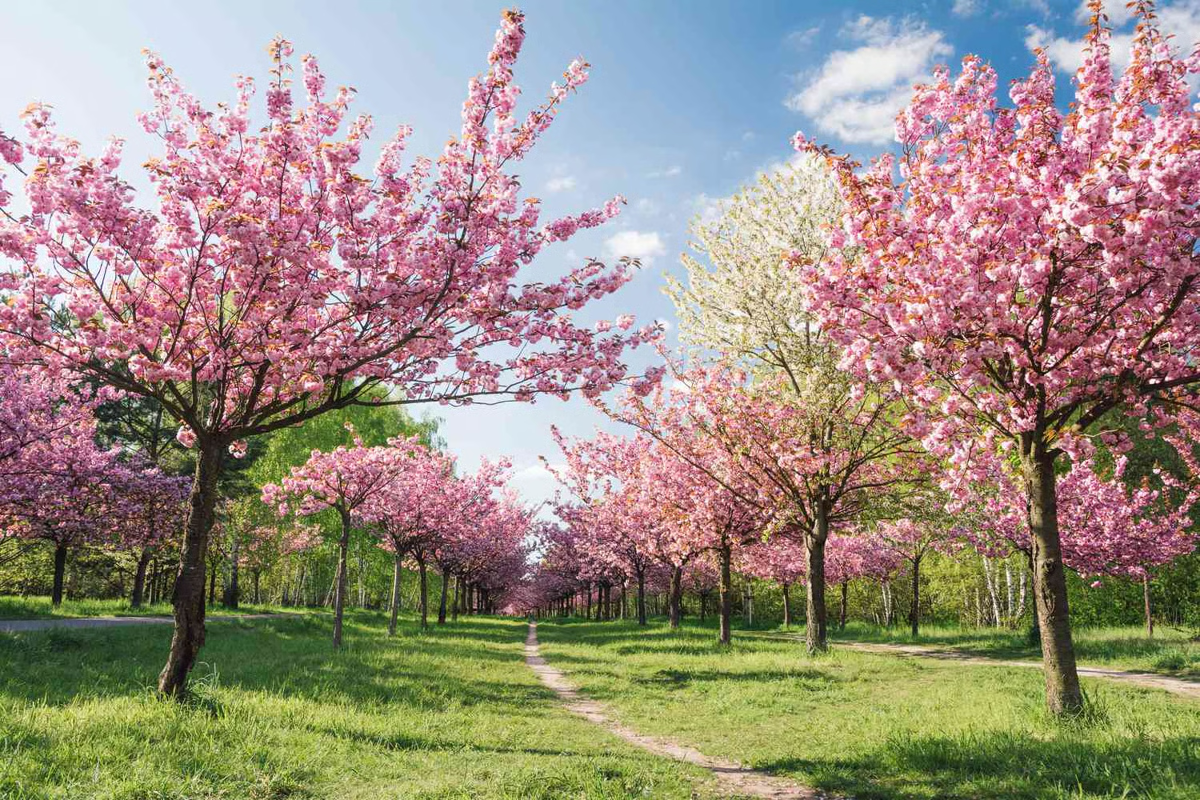
Spring in Germany: March to May
Spring begins slowly.
March can still feel wintry.
April is unpredictable.
May is often excellent.
Spring is ideal for:
- Berlin
- Munich
- Rhine Valley
- Road trips
- Castles
- Photography
- City breaks
May is one of the strongest all-round months.
Summer in Germany: June to August
Summer brings long daylight hours and outdoor life.
Beer gardens fill up.
Parks become busy.
Festivals appear across the country.
This is an excellent period for:
- Cities
- Road trips
- Hiking
- Rhine cruises
- Family travel
- Outdoor dining
July and August can be crowded, especially in popular tourist cities.
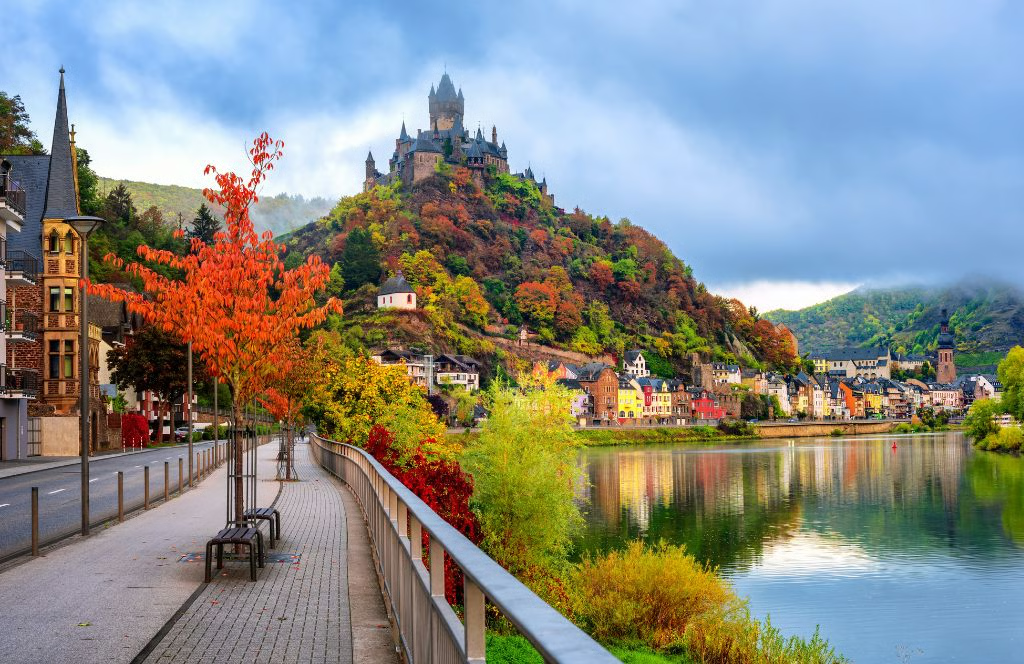
Autumn in Germany: September to November
Autumn is one of Germany’s most interesting seasons.
September is warm enough for comfortable travel.
Late September brings Oktoberfest in Munich.
October adds autumn colour.
By November, temperatures drop quickly.
Autumn is strong for:
- Munich
- Bavaria
- Rhine Valley
- Photography
- Food and wine
- Road trips
Winter in Germany: December to February
Winter is cold, but December is one of Germany’s great travel seasons.
Christmas markets transform cities and towns.
Expect:
- Lights
- Seasonal food
- Mulled wine
- Wooden market stalls
- Festive squares
January and February become quieter outside ski areas and major cities.
Germany Month by Month
January
Cold and relatively quiet.
Cities remain culturally active, but outdoor sightseeing is less comfortable.
Best for: Museums, lower crowds and winter city breaks.
February
Still cold.
Ski areas in southern Germany may remain active.
Cities are generally quieter.
March
Spring begins gradually.
Temperatures remain cool, but daylight increases.
April
Weather can be unpredictable.
You may experience sunshine, rain and cold within the same trip.
May
One of Germany’s best travel months.
Comfortable temperatures and green landscapes make sightseeing easy.
June
Summer begins.
Long days are ideal for city exploration and road trips.
July
Peak summer.
Expect warm weather, festivals and larger crowds.
August
Still busy.
A strong month for outdoor travel and family holidays.
September
One of the best all-round months.
Warm conditions often continue and autumn travel begins.
Munich becomes especially busy because of Oktoberfest.
October
Cooler, colourful and atmospheric.
An excellent month for road trips and cultural travel.
November
A quieter transition month.
Christmas-market preparation begins toward the end of the month.
December
One of Germany’s most distinctive travel months.
Christmas markets become the main attraction in many cities.
Best Time Based on Your Travel Style
First-Time Visit
May-June, September-October
Berlin
May-June, September-October
Munich
May-June, September-October
Oktoberfest
Late September to early October
Christmas Markets
Late November to December
Rhine Valley
May-October
Black Forest
May-October
Road Trips
May-October
Berlin
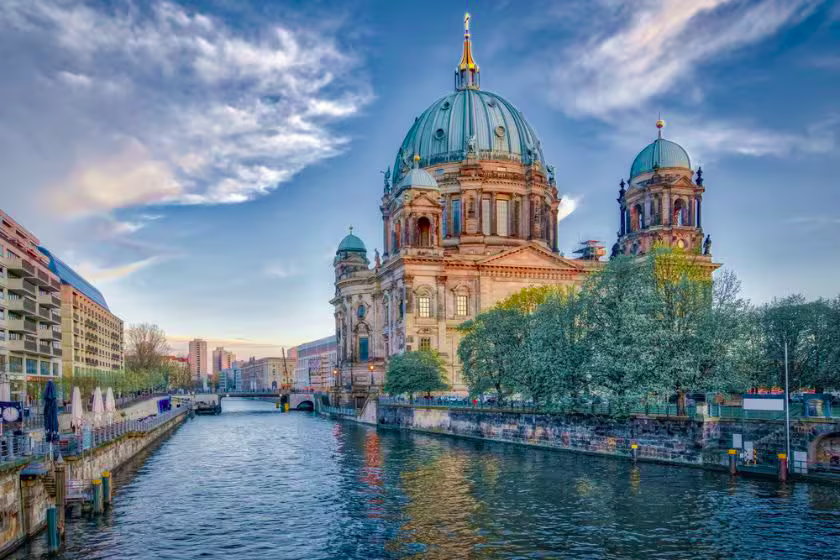
Berlin does not try to be beautiful in the same way as Paris or Vienna.
Its appeal is different.
It is about history, reinvention, art, nightlife and neighbourhood culture.
Highlights include:
- Brandenburg Gate
- Reichstag
- Museum Island
- East Side Gallery
- Berlin Wall memorial sites
- Kreuzberg
- Prenzlauer Berg
Give Berlin at least three days.
Four is better if you want to understand the city beyond its headline sights.
Berlin’s History
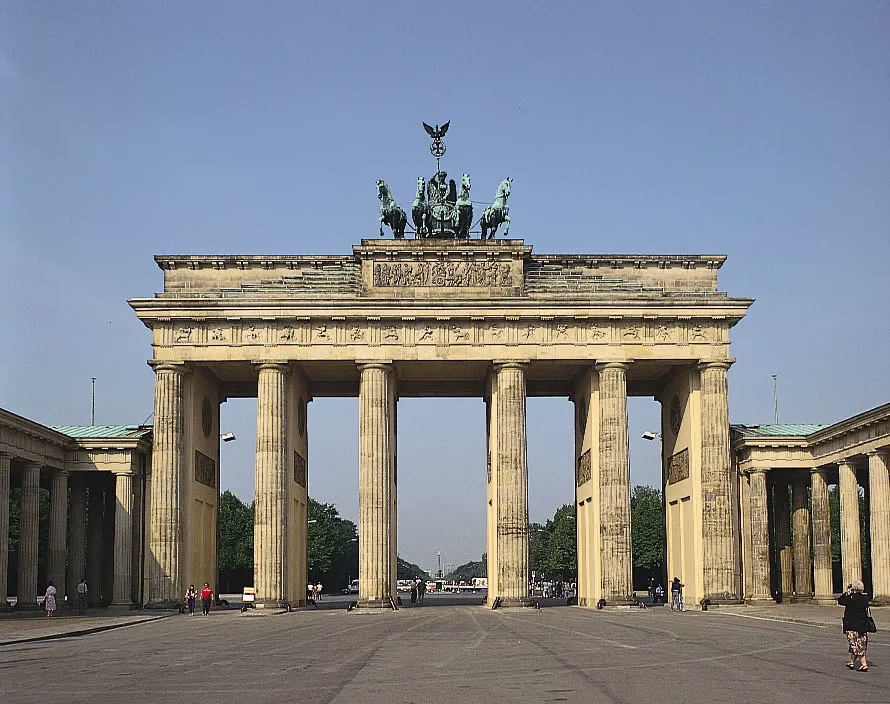
Berlin’s modern identity cannot be separated from the 20th century.
The city carries visible traces of:
- World War II
- The Cold War
- Division
- Reunification
Museums and memorials add context that makes the city much more meaningful than simply photographing landmarks.
Atlas Insider Tip
In Berlin, don’t spend the entire trip moving between major monuments.
Choose at least one neighbourhood and explore it without a strict agenda.
Kreuzberg, Prenzlauer Berg or Neukölln can tell you more about modern Berlin than another hour spent ticking landmarks off a list.
Munich
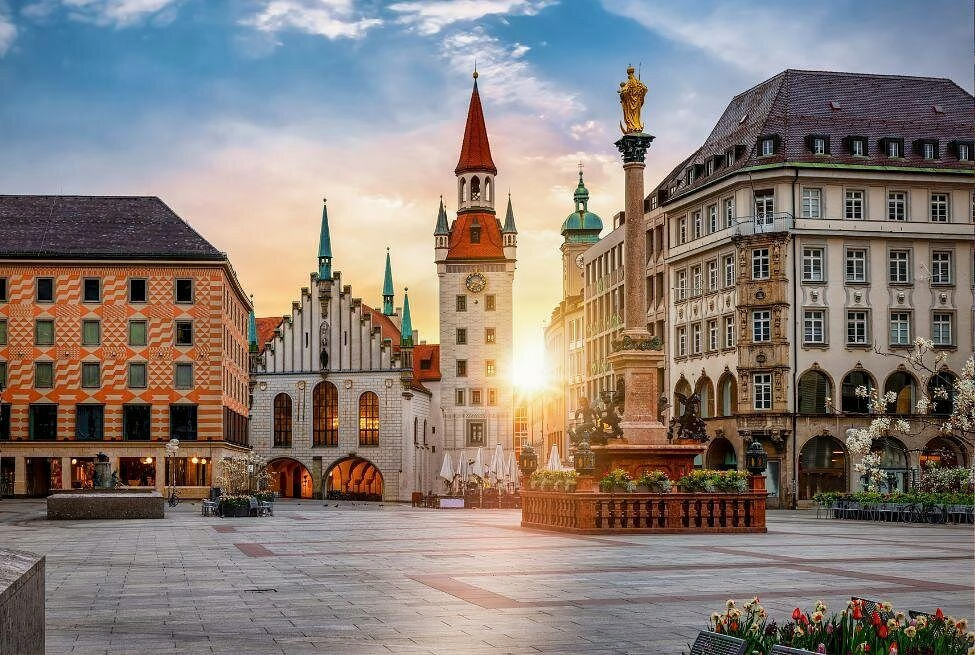
Munich feels very different from Berlin.
It is cleaner, more traditional and strongly associated with Bavaria.
Highlights include:
- Marienplatz
- English Garden
- Residenz
- Viktualienmarkt
- Beer halls
- Museums
Munich also works as an excellent base for day trips into southern Germany.
Oktoberfest
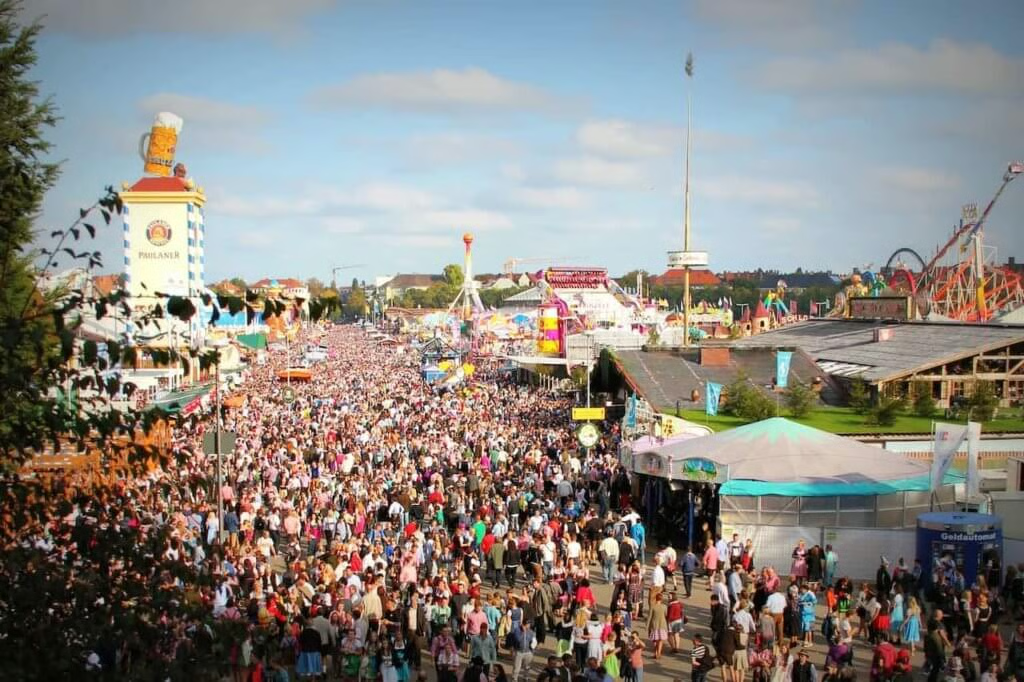
Oktoberfest is one of Germany’s most famous events.
Despite the name, much of the festival usually takes place in September, extending into early October.
If you want to attend:
- Book accommodation very early
- Expect high prices
- Reserve tables where relevant
- Plan transport carefully
Exact annual dates should always be confirmed before booking.
Atlas Insider Tip: Oktoberfest Isn’t Just Beer
Even travellers who are not heavy drinkers can enjoy Oktoberfest.
The event also includes:
- Traditional clothing
- Food
- Music
- Rides
- Family areas
- Bavarian culture
Go earlier in the day if you prefer a calmer atmosphere.
Evenings become much more energetic.
Neuschwanstein Castle
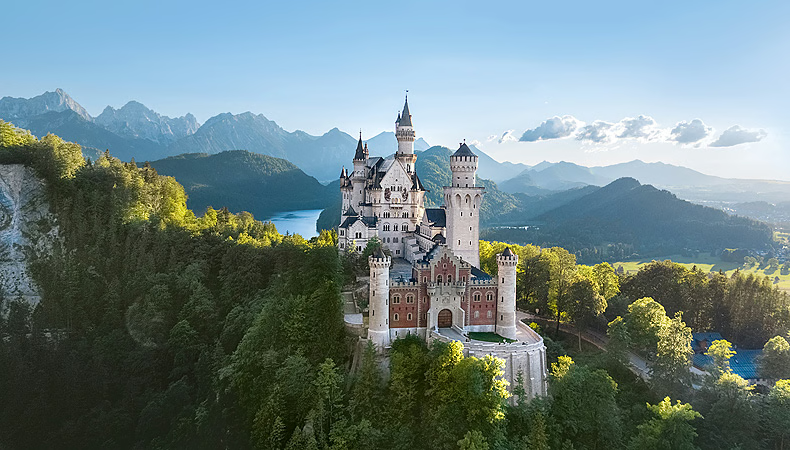
Neuschwanstein is one of Germany’s most famous castles.
Set against the Bavarian Alps, it looks almost unreal from certain viewpoints.
It is often visited as a day trip from Munich.
Book timed entry in advance, especially during summer.
Don’t Rush Neuschwanstein
The castle itself is only part of the experience.
Leave time for:
- Walking trails
- Alpine views
- Nearby villages
- Photo viewpoints
A rushed coach-tour approach can make the day feel much less special.
The Romantic Road
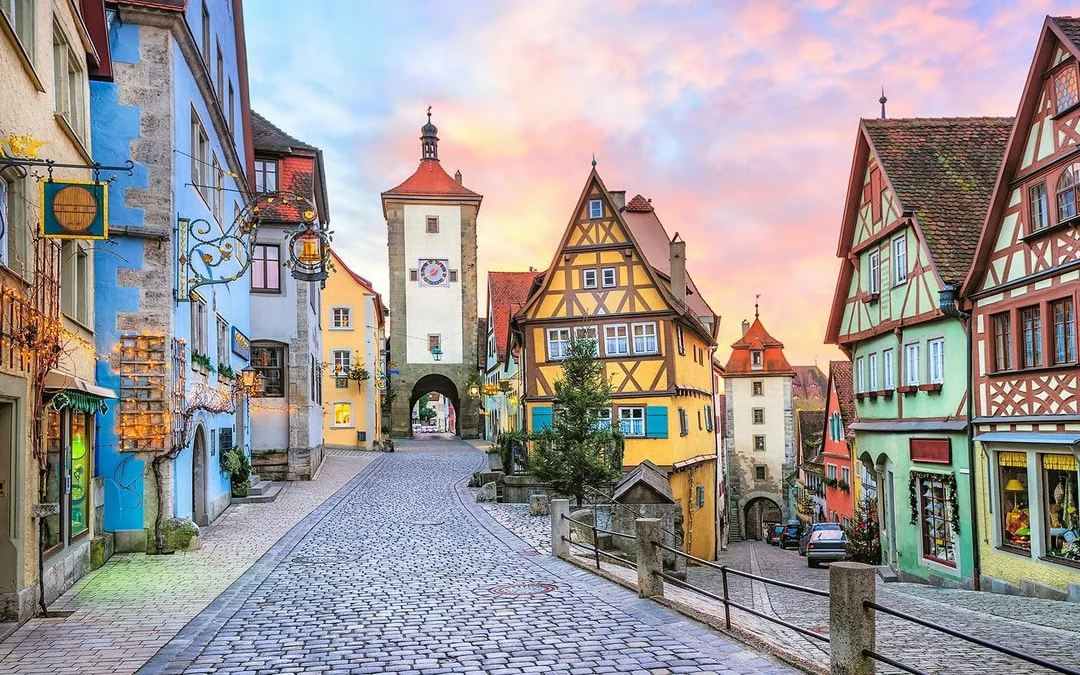
Germany’s Romantic Road links a series of historic towns and landscapes in Bavaria.
Popular stops include:
- Rothenburg ob der Tauber
- Würzburg
- Dinkelsbühl
- Füssen
It works especially well as a slow road trip.
Rothenburg ob der Tauber
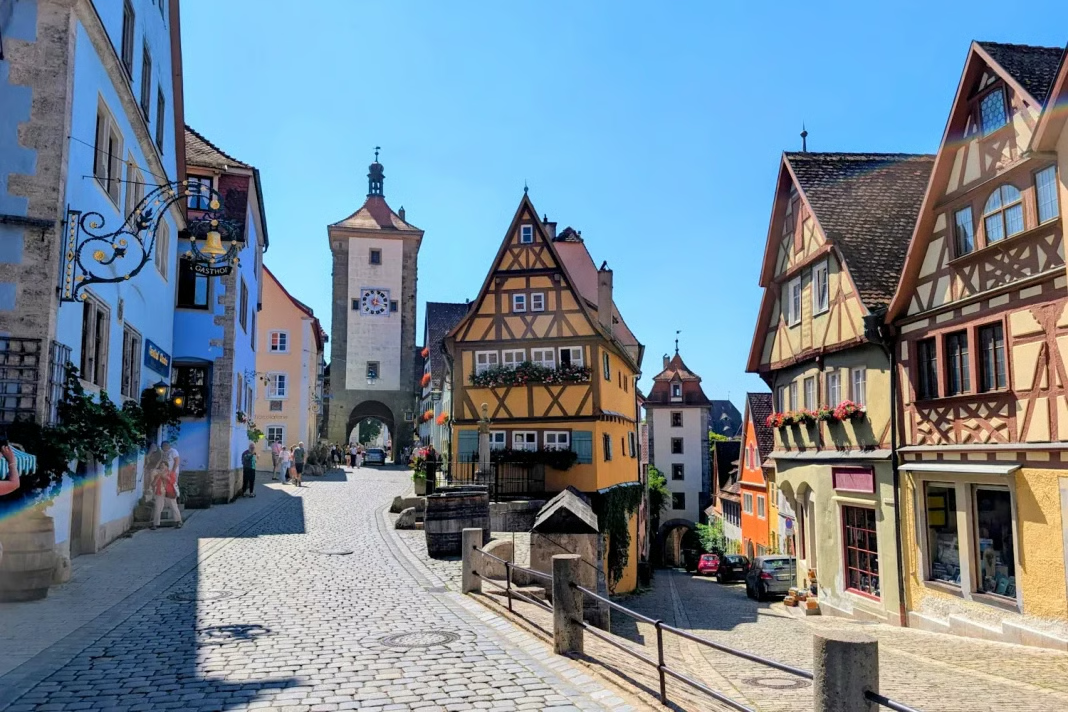
Rothenburg is one of Germany’s most photographed medieval towns.
It is especially atmospheric early in the morning and after day visitors leave.
If possible, stay overnight.
The town feels completely different once the busiest tour groups disappear.
The Black Forest
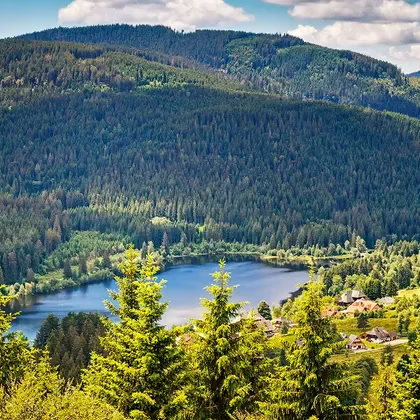
The Black Forest offers a slower version of Germany.
Expect:
- Forest roads
- Villages
- Hiking
- Lakes
- Spa towns
- Regional food
It works particularly well for road trips and nature-focused travel.
Triberg and the Black Forest
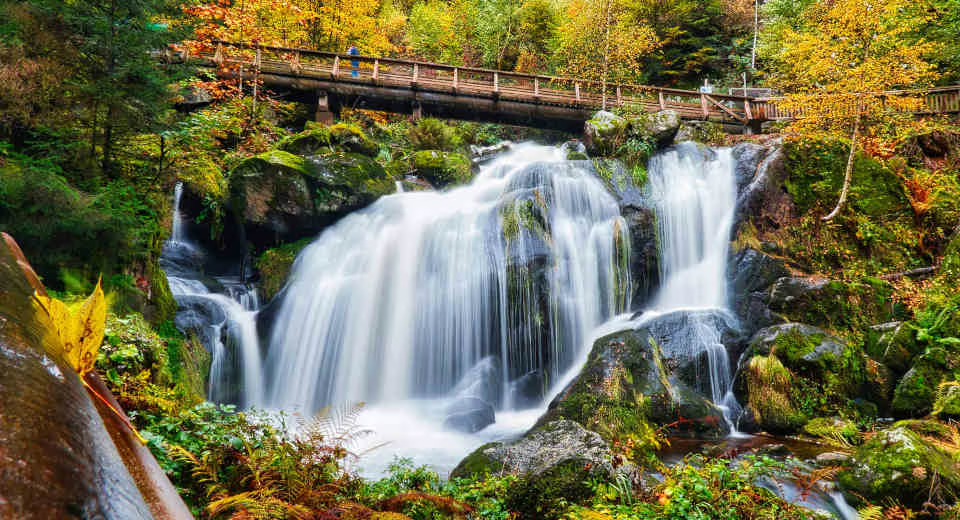
Triberg is often associated with waterfalls and cuckoo clocks.
But the wider Black Forest region is more rewarding than one quick stop.
Give the area time.
The appeal is the landscape, not just individual attractions.
Rhine Valley
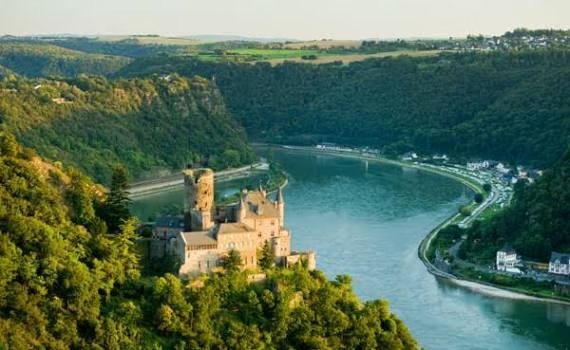
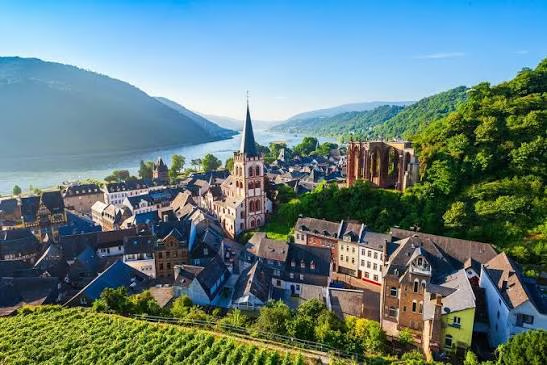
The Rhine Valley is one of Germany’s most scenic regions.
You’ll find:
- Vineyards
- River cruises
- Castles
- Small towns
- Hillside viewpoints
Spring through autumn is the best period for most travellers.
Cologne
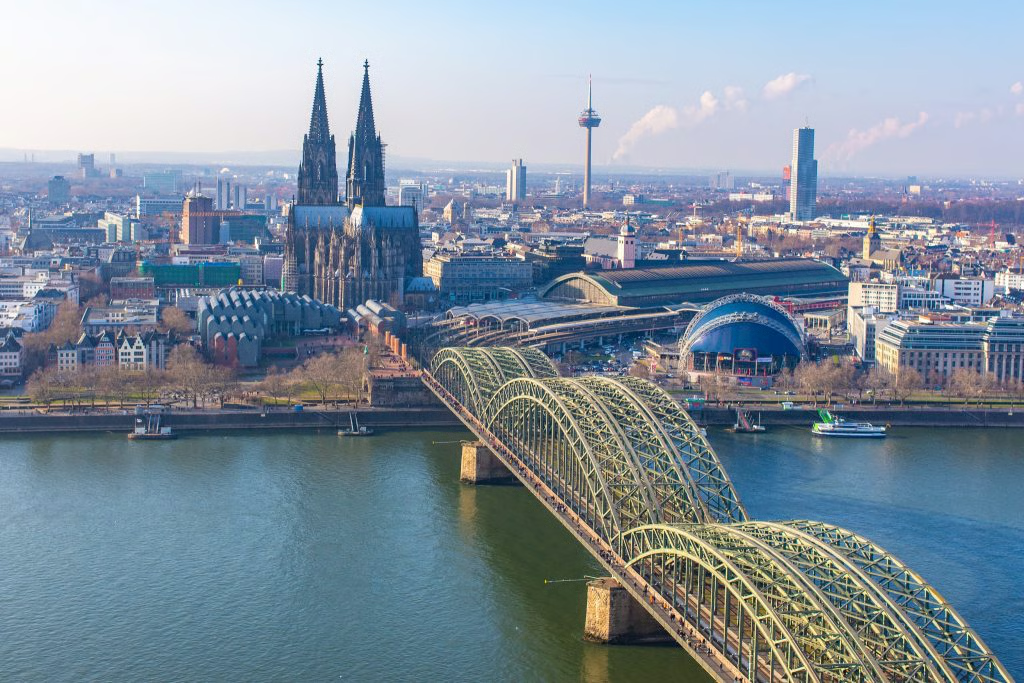
Cologne is dominated by its enormous cathedral.
But the city also offers:
- Rhine waterfront
- Museums
- Old-town areas
- Christmas markets
It works well as a short stop within a western Germany itinerary.
Hamburg
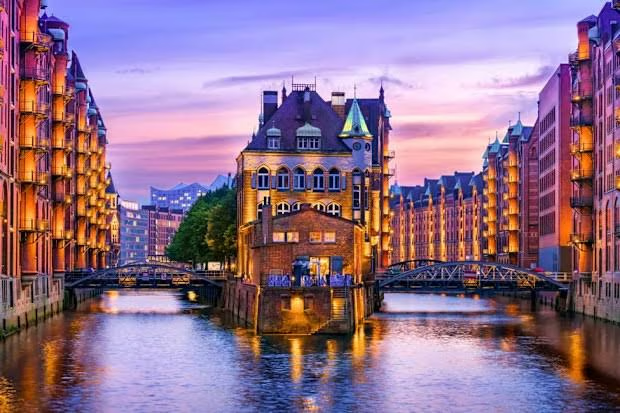 Hamburg has a very different character.
Germany’s major port city is known for:
Hamburg has a very different character.
Germany’s major port city is known for:
- Harbour
- Warehouses
- Canals
- Elbphilharmonie
- Maritime atmosphere
It is excellent for travellers who want a less predictable German city break.
Dresden
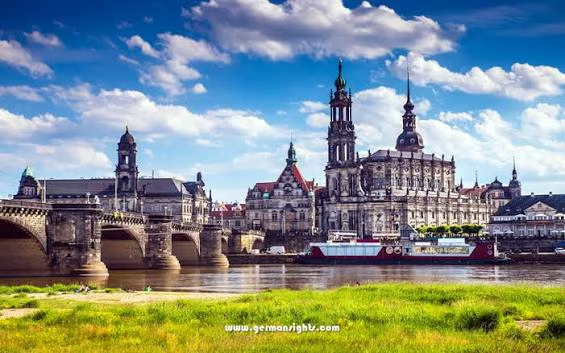
Dresden combines reconstructed historic architecture with major museums.
It is particularly attractive for culture-focused travellers.
The city also works well as part of an eastern Germany route with Berlin.
Germany’s Christmas Markets
Germany is one of Europe’s classic Christmas-market destinations.
Popular cities include:
- Nuremberg
- Dresden
- Cologne
- Munich
- Berlin
- Frankfurt
Each market has a different atmosphere.
Some feel grand.
Others feel local and intimate.
Best Christmas-Market Strategy
Do not try to visit five cities in five days.
Pick two or three bases.
Stay overnight.
The markets are most atmospheric after dark, so day-tripping can mean leaving at exactly the wrong time.
Germany for Couples
Germany is underrated for couples.
A romantic trip might combine:
Munich → Neuschwanstein → Rothenburg → Rhine Valley
or
Berlin → Dresden → Prague
You get:
- History
- Castles
- Food
- Wine
- Small towns
- Scenic rail or road travel
Germany for Families
Germany is easy for families because of strong infrastructure.
Good options include:
- Berlin
- Munich
- Castles
- Theme parks
- Christmas markets
- Scenic rail travel
Children often enjoy the castles and festive season especially.
Germany by Train
Germany has an extensive rail network.
It is easy to connect major cities such as:
- Berlin
- Munich
- Frankfurt
- Hamburg
- Cologne
High-speed trains can save significant time.
But delays can happen, so avoid building extremely tight connections.
When Should You Rent a Car?
A car is most useful for:
- Romantic Road
- Black Forest
- Bavaria
- Small villages
- Countryside routes
For city-only trips, trains and public transport are usually easier.
What Should You Eat in Germany?
German cuisine varies by region.
Bratwurst
Sausages come in countless regional styles.
Schnitzel
Widely available, though more strongly associated with Austria in its classic Viennese form.
Pretzels
Particularly common in Bavaria.
Currywurst
A Berlin street-food classic.
Black Forest Cake
Associated with the Black Forest region.
Apple Strudel
Common across southern Germany and neighbouring Central Europe.
Vegetarian Travel in Germany
Vegetarian and vegan travel is easy in major German cities.
Berlin in particular has one of Europe’s strongest plant-based food scenes.
Traditional menus can be meat-heavy, but modern alternatives are widespread.
Beer Culture in Germany
Beer is deeply tied to regional identity.
Bavaria is especially famous for beer halls and beer gardens.
But drinking is not required to enjoy these spaces.
They are also social places built around food, conversation and community.
How Many Days Do You Need in Germany?
4 to 5 Days
Berlin or Munich
7 Days
Two major cities
9 to 10 Days
Two cities + one scenic region
12 to 14 Days
Excellent for a broader first trip
For most first-time travellers, 9 to 12 days works very well.
A Good First-Time Germany Route
One classic first trip could be:
Berlin → Munich → Neuschwanstein
A more scenic version:
Munich → Romantic Road → Black Forest → Rhine Valley
A winter version:
Munich → Nuremberg → Dresden → Berlin
Choose the route around your travel style rather than trying to cover the entire country.
Germany vs Austria
These neighbours work beautifully together but feel different.
Choose Germany for:
- Berlin
- Bigger-city variety
- Castles
- Rhine Valley
- Modern history
- Larger road-trip possibilities
Choose Austria for:
- Vienna
- Classical music
- Alpine scenery
- Smaller-scale travel
- Elegant café culture
If you have enough time, combining Munich + Salzburg + Vienna makes an excellent Central European itinerary.
Travel Tips Before You Go
- Visit in May, June or September for an easy first trip.
- Book Munich early during Oktoberfest.
- Confirm Christmas-market dates before planning.
- Use trains between major cities.
- Rent a car selectively for countryside regions.
- Stay overnight in smaller towns when possible.
- Don’t underestimate Berlin’s size.
- Leave buffer time for rail connections.
- Pack layers.
- Avoid trying to cover too many regions in one short trip.
Quick Summary
| Travel Goal | Best Time |
|---|---|
| Overall Best Time | May-June, September-October |
| Berlin | May-June, September-October |
| Munich | May-June, September-October |
| Oktoberfest | Late September-Early October |
| Christmas Markets | Late November-December |
| Rhine Valley | May-October |
| Black Forest | May-October |
| Road Trips | May-October |
Frequently Asked Questions
What is the best month to visit Germany?
May, June and September are among the strongest months for a first-time trip.
How many days are enough for Germany?
Around 9 to 12 days works well for two cities plus one scenic region.
When is Oktoberfest?
Oktoberfest usually begins in September and continues into early October. Exact dates vary each year, so always confirm the official calendar before booking.
When do Germany’s Christmas markets open?
Many open in late November and continue through December, though exact dates differ by city.
Is Germany expensive?
Germany can be moderate to expensive depending on the city and season. Munich during Oktoberfest and December travel in famous Christmas-market cities can become particularly costly.
Germany or Austria?
Choose Germany for larger cities, modern history, Rhine landscapes and broader regional variety.
Choose Austria for Vienna, alpine villages, classical culture and a more compact trip.
Both combine extremely well.
Continue Exploring on Mindflix Atlas
- Best Time to Visit Austria
- Best Time to Visit Switzerland
- Best Time to Visit France
- Best Time to Visit Italy
- Best Time to Visit Every Country
- Germany Travel Guide (Coming Soon)
- Berlin Travel Guide (Coming Soon)
- Munich Travel Guide (Coming Soon)
- The Perfect 10-Day Germany Itinerary (Coming Soon)
- Germany Christmas Markets Guide (Coming Soon)
- Germany vs Austria (Coming Soon)
- Best Central Europe Itinerary (Coming Soon)
Germany makes more sense when you stop expecting every region to feel the same.
Berlin is not Munich.
Bavaria is not Hamburg.
The Rhine is not the Black Forest.
And December Germany can feel like a completely different country from summer.
That variety is the point.
Choose a few regions, give them time, and Germany becomes far more memorable than a checklist of famous cities.
Mindflix Atlas helps you understand the destination before you book it, so you can travel smarter and experience more.