
Best Time to Visit Tanzania | Serengeti, Zanzibar & Month-by-Month Guide
Jay Vora
Founder & CEO
Best Time to Visit Tanzania
Tanzania is one of those countries that can give you two completely different holidays in the same trip.
First, the safari.
Endless plains.
Lions in the grass.
Elephants moving across the horizon.
Wildebeest herds stretching further than you expected.
Then, after several early mornings in a safari vehicle, you can fly to Zanzibar and spend the next few days beside the Indian Ocean.
That combination alone makes Tanzania one of Africa’s most compelling first-time destinations.
For most safari travellers, June to October is one of the best times to visit Tanzania because the dry season generally makes wildlife viewing easier. Tanzania National Parks also identifies June to October as a key dry-season period, while January and February are especially important in the Serengeti for calving season.
But there is an important point:
There is no single “Great Migration month.”
The herds move through different parts of the Serengeti ecosystem across the year.
So the best time depends on what exactly you want to see.
Understanding Tanzania’s Seasons
Tanzania is close to the equator, so the year is shaped more by rainfall than by four traditional seasons.
Broadly:
- Dry season: June to October
- Short rains: roughly November to December
- Green/calving period: January to February
- Long rains: roughly March to May
These patterns vary by year and region.
TANAPA notes that the dry season generally offers easier wildlife spotting around water sources, while the short rains bring greener scenery and fewer crowds.
The Best Time for Safari
For classic safari conditions, June to October is hard to beat.
Expect:
- Drier landscapes
- Less dense vegetation
- Wildlife concentrating around water
- Comfortable game-drive conditions
- Strong Serengeti viewing
This is also peak safari season.
That means higher lodge prices and more vehicles at famous sightings.
January and February: Calving Season
January and February offer a completely different Serengeti experience.
Large numbers of wildebeest gather in the southern plains during the calving period.
This brings:
- Newborn animals
- Large herds
- Strong predator activity
- Green landscapes
- Excellent wildlife photography
TANAPA specifically highlights January and February for the Serengeti’s calving season.
For travellers who care more about wildlife drama than dry-season scenery, this can be one of the most exciting times to go.
The Great Migration: What Travellers Often Get Wrong
The Great Migration is not an event that happens on one specific date.
It is a continuous movement through the Serengeti–Mara ecosystem.
The location of the herds changes based on:
- Rainfall
- Grazing conditions
- Water
- Seasonal movement
That means you should choose your safari area based on the likely location of the migration during your travel dates.
Tanzania Month by Month
January
A fantastic safari month in the southern Serengeti.
The landscape is green and the calving season begins building.
Best for: Southern Serengeti, photography and green-season safaris.
February
One of the most exciting wildlife months.
Calving activity is especially important during this period.
Predators often become highly active around the herds.
March
Conditions begin transitioning toward the long rains.
Wildlife viewing can remain very good, but rain becomes more likely.
April
Part of the long rainy season.
Some roads become difficult.
Certain lodges or camps may reduce operations.
The reward is:
- Fewer visitors
- Green landscapes
- Dramatic skies
May
Rain can continue.
This is one of the quieter safari months.
Travellers seeking value may find opportunities, but flexibility is essential.
June
The dry season begins.
Safari conditions improve quickly.
This is one of the strongest months before peak-season intensity builds.
July
Peak safari season.
Excellent for wildlife viewing.
Migration activity may move toward northern areas depending on the year.
August
One of the busiest safari months.
The northern Serengeti becomes especially important during migration season.
Book well ahead.
September
Excellent conditions continue.
Dry-season wildlife viewing remains strong.
October
Still one of the best safari months.
The landscape remains dry, and wildlife viewing is generally excellent.
November
Short rains may arrive.
The landscape begins becoming greener again.
Crowds usually reduce.
December
An interesting transition month.
The country becomes greener, while wildlife remains active.
Festive-season travel can increase prices.
Best Time Based on Your Travel Style
First Safari
June to October
Serengeti
June to October, January-February for calving
Great Migration
Year-round in different parts of the ecosystem, depending on herd location
Calving Season
January-February
Ngorongoro Crater
Year-round
Zanzibar
June to October, December to February
Kilimanjaro
January-February, June-October
Honeymoon
June-October, January-February
Serengeti National Park
The Serengeti is Tanzania’s most famous safari destination.
And deservedly so.
The scale is difficult to appreciate until you are there.
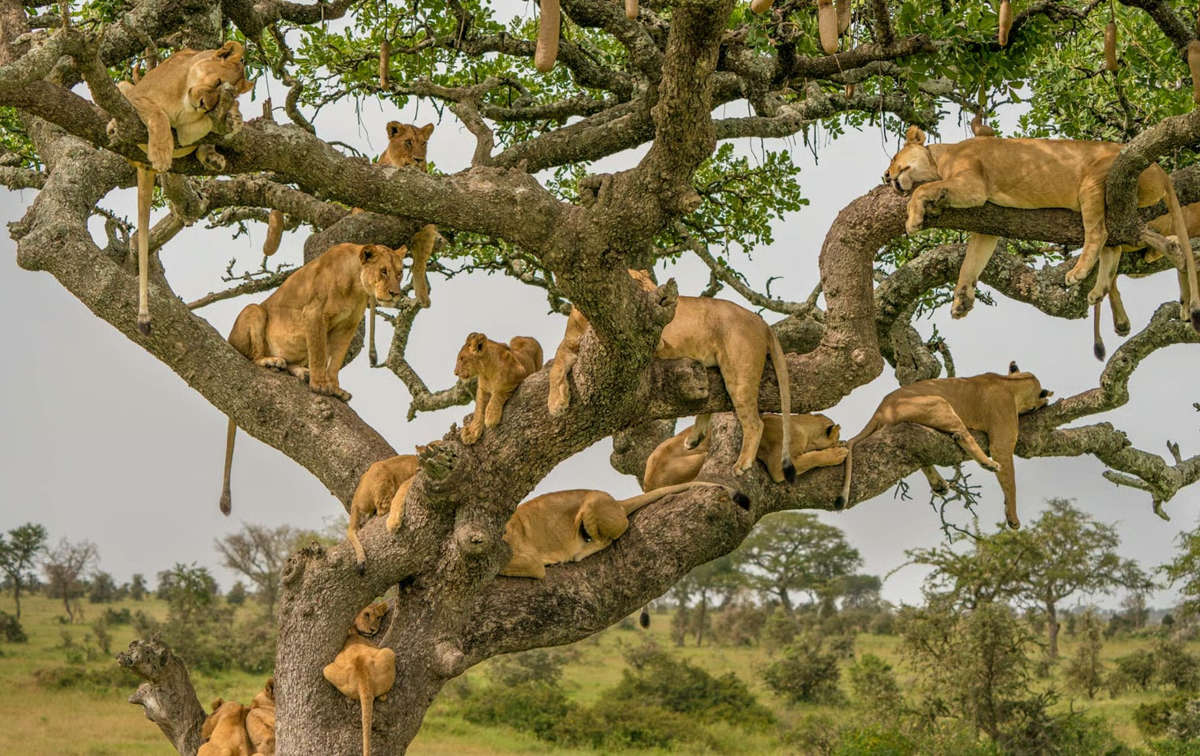
TANAPA describes the park as home to more than 1.5 million migrating wildebeest and zebras, and the ecosystem remains one of the world’s great wildlife spectacles.
But the Serengeti is not one uniform landscape.
Different regions matter at different times of year.
Southern Serengeti
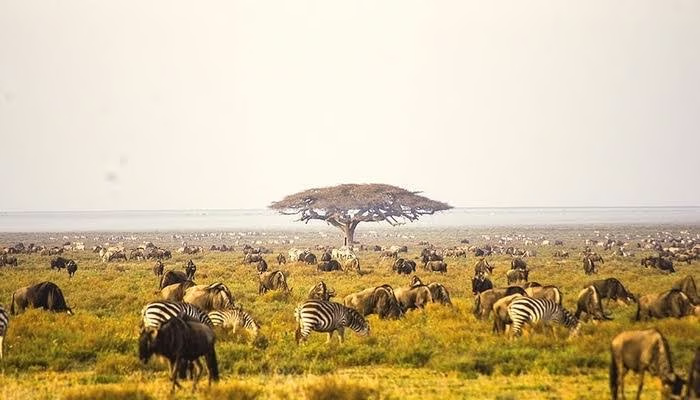
The southern plains become especially important during the calving season.
January and February are key months.
Travellers come for:
- Large herds
- Newborn wildebeest
- Predator activity
- Green open plains
This is a very different visual experience from dry-season safari.
Central Serengeti
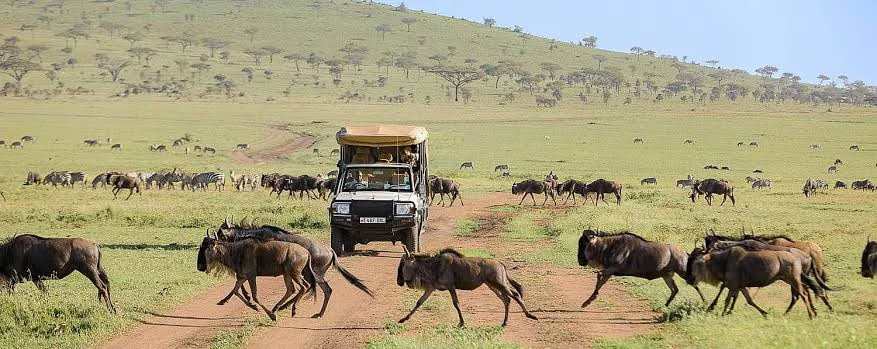
Central Serengeti around Seronera is productive across much of the year.
It is known for reliable wildlife viewing and a high concentration of predators.
For first-time safari travellers, it works extremely well as part of a broader Serengeti itinerary.
Northern Serengeti
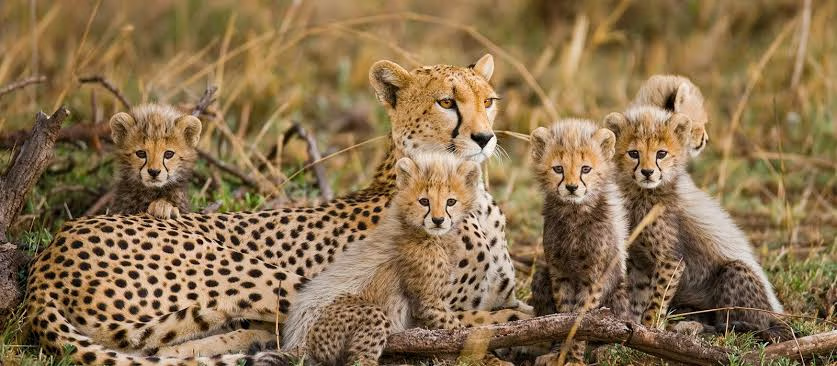
Northern Serengeti becomes especially important during the migration period associated with the Mara River.
This is where travellers often hope to see river crossings.
But river crossings are unpredictable.
Animals can wait near the river for hours.
They may turn around.
They may cross somewhere else.
Or the crossing may happen when you least expect it.
Atlas Insider Tip
Never choose a Serengeti lodge based only on how luxurious it looks.
Location is critical.
A camp near the wildlife zone relevant to your travel month can save hours of driving.
Before booking, ask:
Where are the migration herds usually located during my dates, and how far is this camp from that area?
In safari planning, geography can matter more than thread count.
River Crossings
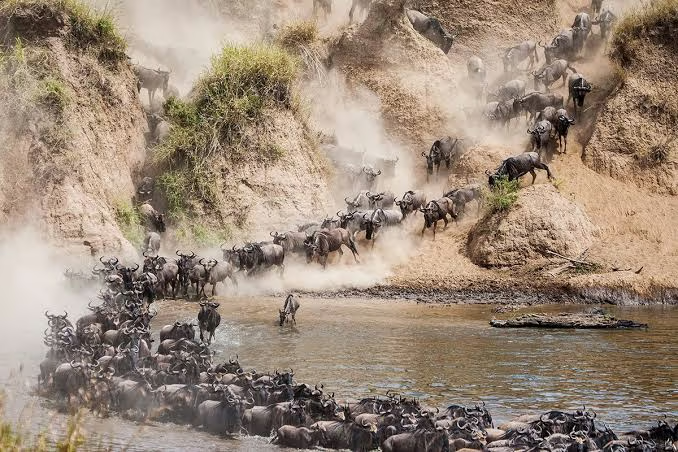
River crossings are one of safari’s most dramatic experiences.
They are also one of the easiest to misunderstand.
No operator can guarantee one.
The responsible approach is to treat a crossing as a possibility, not a scheduled attraction.
Tanzania National Parks has specific guidelines intended to reduce pressure and unsafe vehicle behaviour around crossing points, including designated viewing positions.
That matters.
The wildlife experience should never come at the expense of the animals.
Ngorongoro Crater
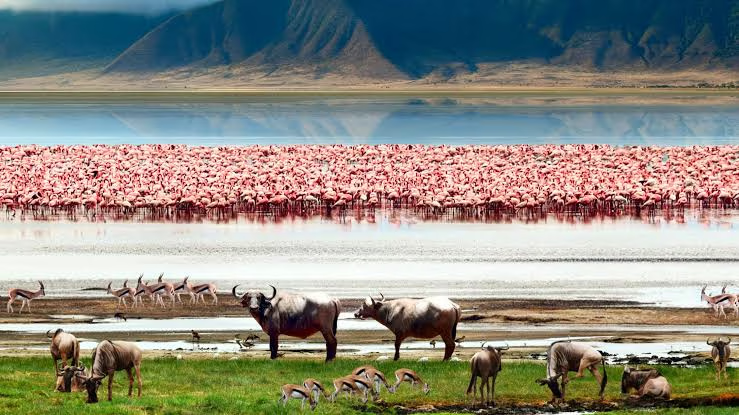
Ngorongoro is one of Tanzania’s most extraordinary wildlife areas.
The crater floor supports a dense concentration of animals within a dramatic volcanic landscape.
You may see:
- Lions
- Elephants
- Buffalo
- Hippos
- Hyenas
- Flamingos
- Rhinos, if fortunate
The scenery alone makes it worth visiting.
How Long Do You Need at Ngorongoro?
Many travellers visit the crater as part of a broader northern Tanzania safari.
One full game-drive day is enough for most first-time visitors.
Staying nearby the night before helps you enter earlier.
Tarangire National Park
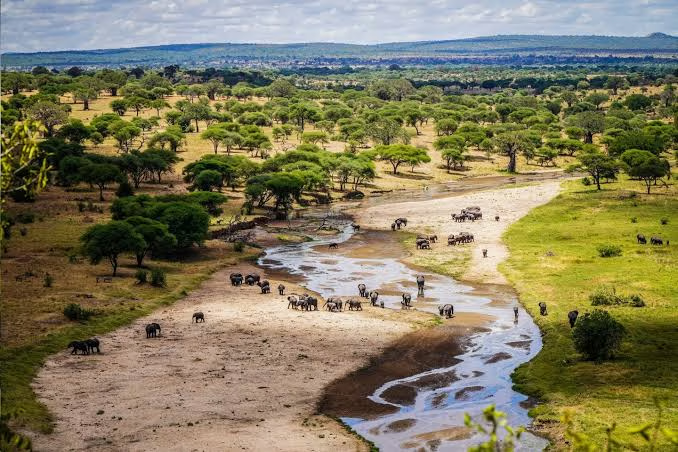
Tarangire is sometimes overshadowed by Serengeti and Ngorongoro.
That is a mistake.
The park is known for:
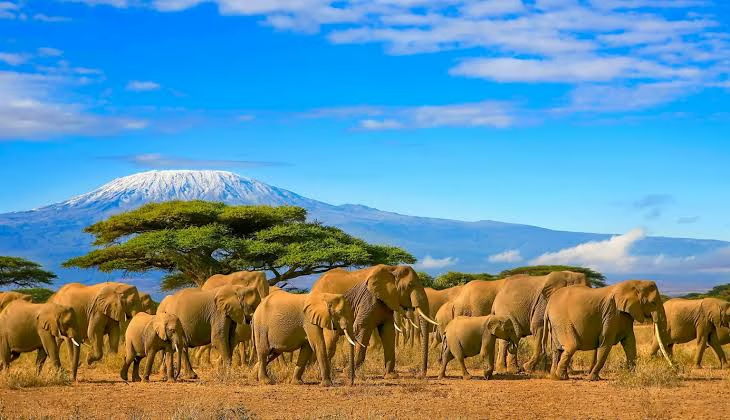
- Elephants
- Baobab trees
- Seasonal wildlife concentrations
- Beautiful landscapes
It works particularly well as part of the classic northern circuit.
Lake Manyara
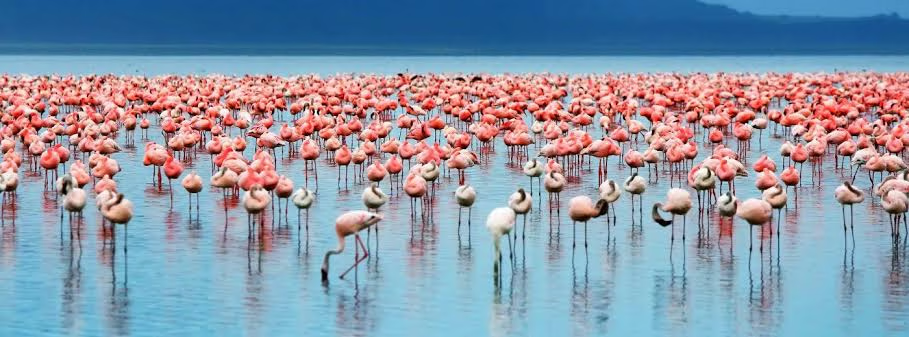
Lake Manyara is another common stop on northern Tanzania itineraries.
The park offers:
- Birdlife
- Forests
- Rift Valley scenery
- Wildlife viewing
It can serve as a useful transition between Arusha and the larger safari parks.
The Classic Northern Safari Circuit
A first Tanzania safari often looks something like:
Arusha → Tarangire → Ngorongoro → Serengeti
This route works because each destination feels different.
You do not need to add every park available.
The goal is not to collect national parks.
It is to spend enough time inside each one.
How Many Safari Nights Do You Need?
3 Nights
Possible, but rushed
5 Nights
Good introduction
6 to 8 Nights
Excellent for a first northern-circuit safari
9+ Nights
Better for slower travel or seasonal migration positioning
For most first-time travellers, 6 to 8 safari nights creates a much better experience than racing through several parks.
Zanzibar
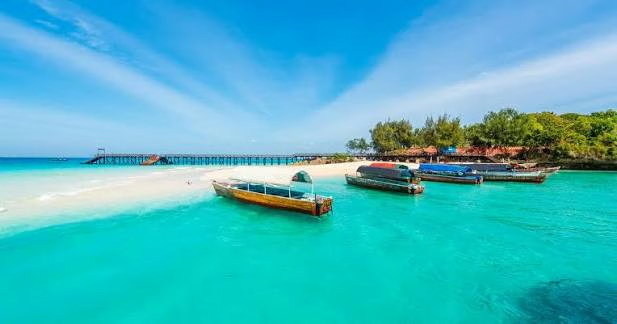
After safari, Zanzibar feels like another country.
The pace slows.
The air becomes tropical.
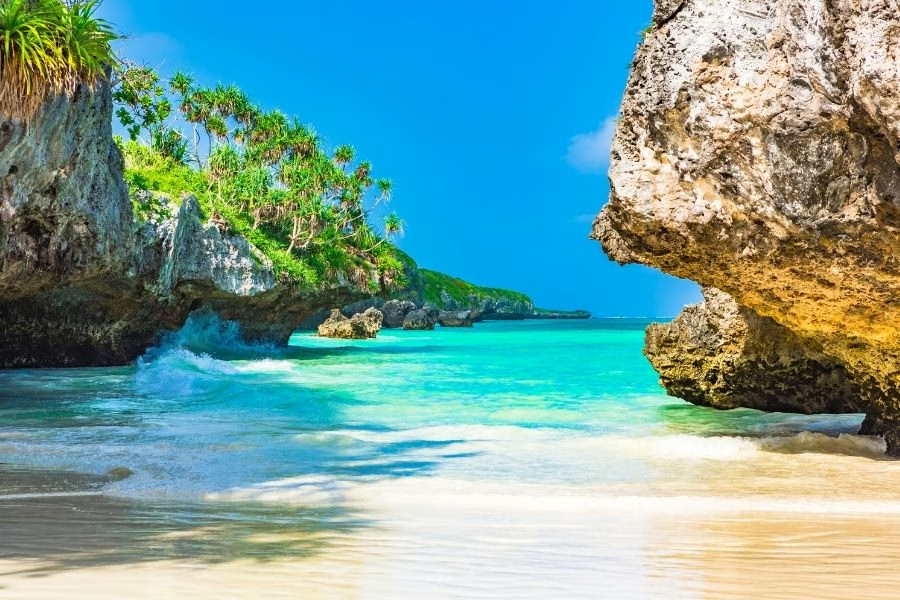
Game-drive dust is replaced by white sand and warm Indian Ocean water.
That contrast is exactly why the safari + Zanzibar combination works so well.
Zanzibar Is More Than a Resort
Many travellers fly in, transfer straight to a beach resort and never explore anything else.
That misses part of the island.
Zanzibar offers:
- Stone Town
- Swahili culture
- Spice history
- Beaches
- Diving
- Local food
Spend at least a little time beyond the hotel.
Stone Town
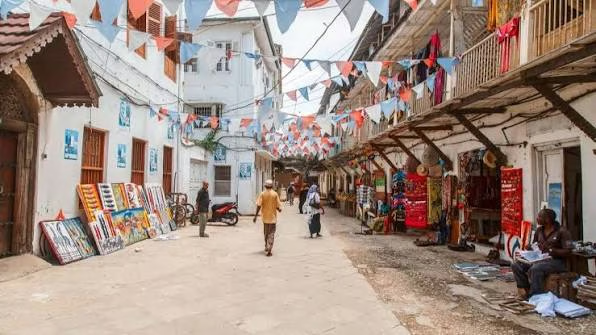
Stone Town is Zanzibar’s historic core.
Expect:
- Narrow lanes
- Carved doors
- Markets
- Historic buildings
- Rooftops
- Swahili, Arab, Indian and African influences
It is compact but layered.
A guided walking tour can add useful context.
Best Beaches in Zanzibar
Different parts of Zanzibar feel different.
Nungwi & Kendwa
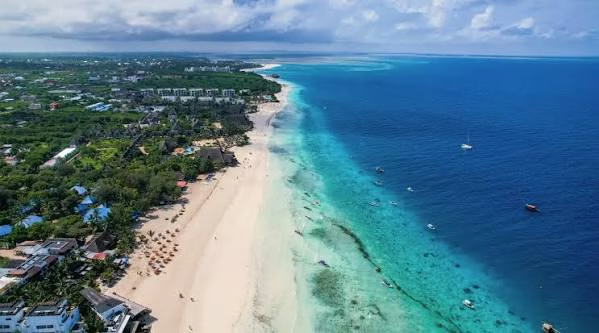
Good for:
- Swimming
- Resorts
- Sunsets
- More social atmosphere
Paje & Jambiani
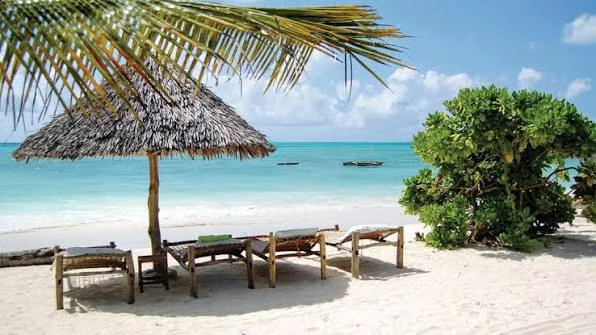
Good for:
- Kitesurfing
- Beach cafés
- Slower travel
- East-coast atmosphere
The tides are much more noticeable on parts of the east coast.
Choose your beach based on what you want to do.
Atlas Insider Tip: Zanzibar Tides Matter
Do not choose a Zanzibar hotel based only on beach photographs.
Ask about the tides.
Some east-coast beaches can retreat dramatically at low tide.
That may be perfect if you love long walks and tidal landscapes.
Less ideal if you expect to swim directly outside your room all day.
Tanzania Safari + Zanzibar
This is one of the world’s best two-part holidays.
A strong itinerary might look like:
Arusha → Tarangire → Ngorongoro → Serengeti → Zanzibar
You get:
- Wildlife
- Landscapes
- Early mornings
- Adventure
followed by:
- Beach
- Food
- Swimming
- Slow afternoons
It is difficult to improve on that combination.
Tanzania for Honeymooners
Tanzania is exceptional for honeymoons.
A luxury safari camp followed by Zanzibar gives couples two completely different experiences.
Think:
- Sunrise game drives
- Bush dinners
- Boutique camps
- Private pools
- Beach resorts
For couples who want something more memorable than seven days in one resort, Tanzania is a serious contender.
Tanzania for Families
Tanzania can also work brilliantly for families.
Children often find safari unforgettable.
But game drives can involve:
- Early mornings
- Long periods sitting
- Bumpy roads
- Quiet waiting
Choose family-friendly lodges and keep the itinerary realistic.
Some activities may have age restrictions.
Mount Kilimanjaro
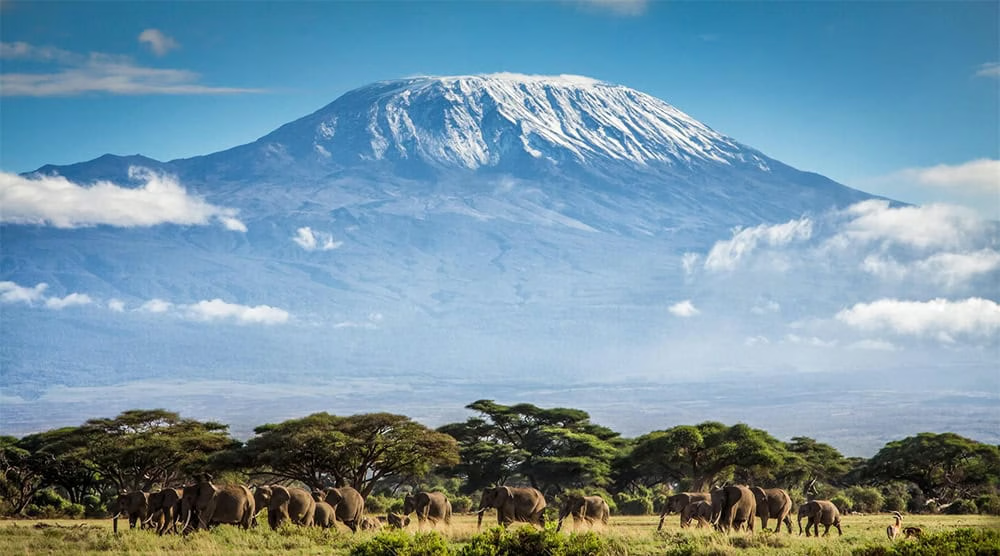
Kilimanjaro is Africa’s highest mountain and one of Tanzania’s defining landmarks.
Climbing it is a very different trip from going on safari.
It requires:
- Multiple trekking days
- Physical preparation
- Altitude acclimatisation
- Appropriate gear
Do not treat it like a casual extension to a safari.
Best Time to Climb Kilimanjaro
January-February and June-October are commonly favoured because they generally offer drier conditions.
Weather in high mountains can always change quickly.
Proper route selection and acclimatisation matter more than trying to optimise one “perfect” week.
Kilimanjaro Altitude
Altitude is the biggest challenge.
You do not need technical mountaineering skills on standard trekking routes.
But you do need to respect the altitude.
Slower itineraries usually provide better acclimatisation opportunities.
Never choose a route only because it is the shortest.
Arusha
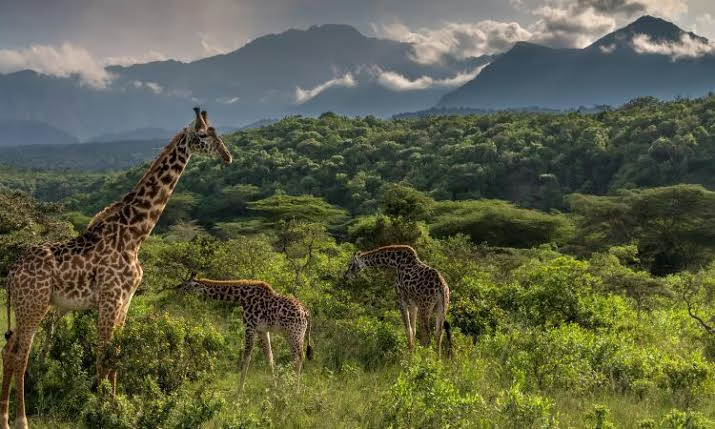
Arusha is the main gateway for Tanzania’s northern safari circuit.
Most travellers use it for:
- Arrival
- Safari briefing
- Overnight stay
- Transfers
If you have extra time, the region around Arusha offers coffee estates, markets and mountain scenery.
Wildlife Photography
Tanzania is extraordinary for photography.
Useful tips:
- Carry binoculars
- Use a zoom lens if possible
- Protect equipment from dust
- Keep spare batteries
- Photograph landscapes, not only animals
Some of your best images may be:
- Dust behind elephants
- Sunrise over grasslands
- A lone acacia tree
- Camp at dusk
Safari is about atmosphere as much as close-up wildlife.
Responsible Safari Travel
Good safari behaviour matters.
Always:
- Follow your guide’s instructions
- Keep appropriate distance
- Never feed wildlife
- Avoid pressuring guides to approach animals too closely
- Respect park rules
- Choose operators with responsible wildlife practices
TANAPA specifically asks visitors to remain within designated areas, follow guide instructions and respect park regulations.
A photograph is never worth disturbing an animal.
What Should You Wear on Safari?
Pack for comfort rather than costume.
Useful items include:
- Neutral-coloured clothing
- Light layers
- Warm jacket for mornings
- Comfortable shoes
- Hat
- Sunglasses
- Sun protection
Early-morning game drives can feel surprisingly cold.
What Should You Eat in Tanzania?
Tanzanian food reflects African, Arab and Indian influences.
Ugali
A maize-based staple commonly eaten with vegetables or meat.
Pilau
Spiced rice with strong Swahili influences.
Nyama Choma
Grilled meat popular across East Africa.
Chapati
Very familiar to Indian travellers.
Zanzibar Cuisine
Zanzibar adds:
- Seafood
- Coconut
- Spices
- Swahili flavours
Food becomes another reason to spend time outside the resort.
Vegetarian Travel in Tanzania
Vegetarian travellers usually manage well.
Common options include:
- Beans
- Rice
- Chapati
- Lentils
- Vegetables
- Fruit
Safari lodges generally accommodate dietary requirements if informed in advance.
How Many Days Do You Need in Tanzania?
5 to 6 Days
Short safari
7 to 9 Days
Strong northern-circuit safari
10 to 12 Days
Safari + short Zanzibar stay
12 to 14 Days
Ideal safari + Zanzibar combination
2 Weeks+
Excellent for slower safari, beach and cultural travel
For most first-time travellers, 10 to 14 days works exceptionally well.
A Good First-Time Tanzania Route
A balanced first trip could be:
Arusha → Tarangire → Ngorongoro → Serengeti → Zanzibar
If you have less time:
Arusha → Ngorongoro → Serengeti → Zanzibar
If wildlife is the priority:
Spend more nights in Serengeti and skip unnecessary park-hopping.
Tanzania vs Kenya
This is one of Africa’s classic comparisons.
Choose Tanzania for:
- Serengeti
- Ngorongoro
- Zanzibar
- Kilimanjaro
- Safari + beach in one country
Choose Kenya for:
- Masai Mara
- Amboseli
- Nairobi connections
- Classic East African safari circuits
Both share the wider Serengeti–Mara ecosystem.
Neither is “better.”
The best choice depends on season, itinerary and what you want beyond safari.
Tanzania vs South Africa
Choose Tanzania for:
- Classic East African savannah
- Great Migration
- Safari + Zanzibar
- More wilderness-focused itineraries
Choose South Africa for:
- Cape Town
- Wine country
- Self-drive possibilities
- Safari + sophisticated city travel
They offer very different first safari experiences.
Travel Tips Before You Go
- Choose June to October for classic dry-season safari.
- Consider January-February for calving season.
- Never assume river crossings are guaranteed.
- Choose Serengeti accommodation based on seasonal location.
- Give the safari enough nights.
- Add Zanzibar after safari, not before, if you want to finish relaxed.
- Check tides before choosing a Zanzibar beach hotel.
- Use responsible wildlife operators.
- Pack layers for game drives.
- Verify current entry, health and park requirements before travel.
Quick Summary
| Travel Goal | Best Time |
|---|---|
| Overall Safari | June-October |
| Serengeti | June-October |
| Calving Season | January-February |
| Great Migration | Different areas through the year |
| Ngorongoro | Year-round |
| Zanzibar | June-October, December-February |
| Kilimanjaro | January-February, June-October |
| Honeymoon | June-October, January-February |
Frequently Asked Questions
What is the best month to visit Tanzania?
For a classic first safari, July through September are especially popular. For calving season, January and February are excellent.
When is the Great Migration in Tanzania?
The migration moves through different parts of the Serengeti ecosystem throughout the year. June to October is especially popular for dry-season viewing, while January and February are associated with calving in the southern plains.
How many days are enough for Tanzania?
Around 10 to 14 days works very well for a safari plus Zanzibar.
Tanzania or Kenya for first safari?
Both are excellent. Tanzania is especially attractive for travellers who want Serengeti, Ngorongoro and Zanzibar in one itinerary.
Is Zanzibar worth adding after safari?
Absolutely. It provides an excellent contrast and gives you time to slow down after several early-morning game drives.
Are river crossings guaranteed?
No. Migration crossings are natural events and cannot be scheduled or guaranteed.
Continue Exploring on Mindflix Atlas
- Best Time to Visit Kenya
- Best Time to Visit South Africa
- Best Time to Visit Seychelles
- Best Time to Visit Mauritius
- Best Time to Visit Egypt
- 50 International Destinations Every Indian Traveller Should Experience at Least Once
- Tanzania Travel Guide (Coming Soon)
- Serengeti Safari Guide (Coming Soon)
- Zanzibar Travel Guide (Coming Soon)
- The Perfect 12-Day Tanzania Itinerary (Coming Soon)
- Tanzania vs Kenya (Coming Soon)
- Best Safari Destinations in Africa (Coming Soon)
Tanzania is one of those places where the trip changes rhythm halfway through.
First, you wake before sunrise.
You watch animals for hours.
You learn to be patient.
You start recognising the difference between empty grass and grass where something is hiding.
Then you fly to an island.
You put the alarm away.
You swim.
You eat slowly.
And the safari dust disappears into the Indian Ocean.
Few destinations make those two completely different experiences fit together so naturally.
That is what makes Tanzania unforgettable.
Mindflix Atlas helps you understand the destination before you book it, so you can travel smarter and experience more.