
Best Time to Visit Canada: Banff, Vancouver, Toronto & Month-by-Month Guide (2026)
Jay Vora
Founder & CEO

Best Time to Visit Canada
Canada is enormous.
And that matters more than almost anything else when planning a trip.
You can have crisp mountain mornings in Alberta, mild coastal weather in Vancouver, autumn colours in Ontario and snow already returning to parts of the Rockies.
So there is no single “best time” for the whole country.
For most first-time travellers, May to June and September to October are excellent periods because they offer a strong balance of weather, scenery and manageable crowds.
But if skiing, autumn foliage or national parks are your priority, another season may suit you better.
Understanding Canada’s Seasons
Canada has four distinct seasons.
Broadly:
- Spring: March to May
- Summer: June to August
- Autumn: September to November
- Winter: December to February
Conditions vary hugely by region.
Western Canada is influenced by the Pacific and mountains.
Central Canada experiences hotter summers and colder winters.
Atlantic Canada has its own coastal climate.
The Rockies are a world of their own.
Spring in Canada: March to May
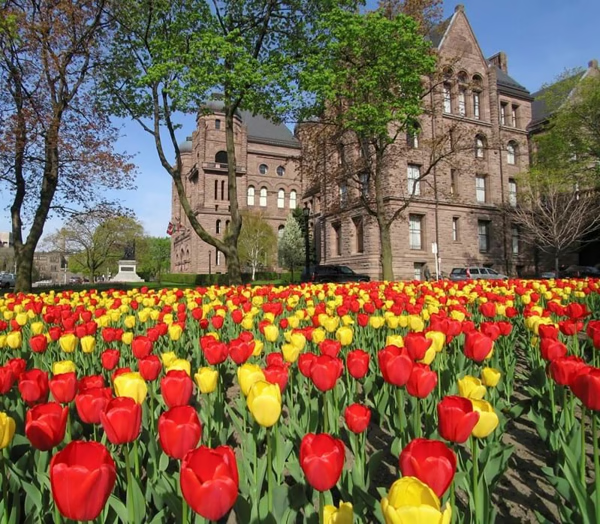
Spring arrives slowly.
March can still feel like winter in many areas.
By April, cities begin warming up.
May is one of the most pleasant months for urban travel and shoulder-season sightseeing.
Spring is good for:
- Toronto
- Vancouver
- Niagara Falls
- City breaks
- Lower crowds
- Early road trips
Mountain areas may still have snow.
Summer in Canada: June to August
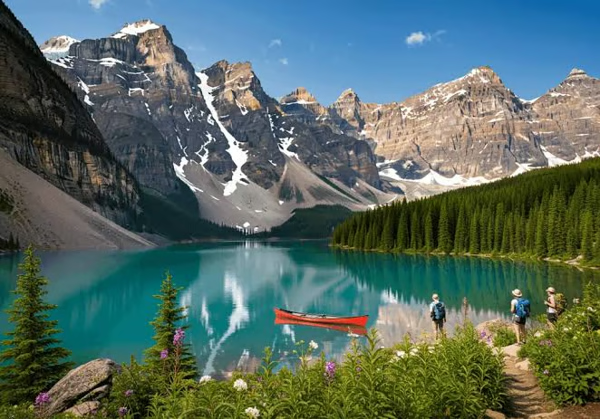
Summer is peak season.
Days are long.
National parks are busy.
Mountain roads are fully accessible.
This is the strongest period for:
- Banff
- Jasper
- Road trips
- Hiking
- Lakes
- Family holidays
- Outdoor activities
The trade-off is higher prices and more visitors.
Autumn in Canada: September to November
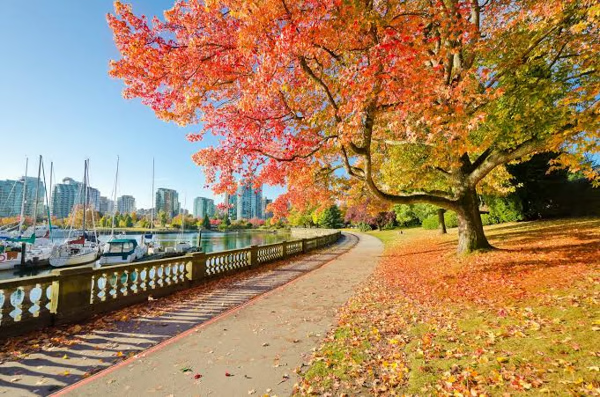
Autumn is one of Canada’s most beautiful seasons.
The country becomes famous for its red, orange and gold foliage.
September is especially strong because the weather remains comfortable while crowds begin easing.
October can be spectacular in eastern Canada.
Autumn is ideal for:
- Photography
- Road trips
- City breaks
- Nature
- Couples
- Food travel
Winter in Canada: December to February
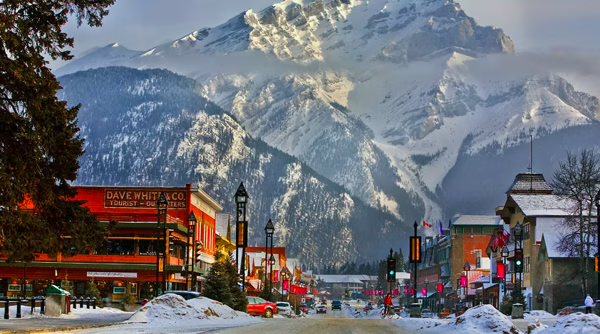
Winter is serious.
Many regions experience snow, freezing temperatures and short days.
But this is also when Canada becomes a world-class winter destination.
Winter is excellent for:
- Skiing
- Snowboarding
- Ice skating
- Winter festivals
- Snow holidays
- Northern Lights in selected regions
Canada Month by Month
January
Deep winter.
Expect snow and cold temperatures across large parts of the country.
Best for: Skiing, snow holidays and winter festivals.
February
Winter continues.
Excellent for mountain resorts and winter sports.
March
A transition month.
Cities slowly begin warming up, while ski areas can still perform well.
April
Spring arrives more clearly in major cities.
A good month for quieter urban travel.
May
One of the best shoulder-season months.
Pleasant temperatures and fewer crowds make it ideal for cities and early nature trips.
June
Summer begins.
National parks become fully active.
An excellent month for road trips before peak July crowds.
July
Peak summer.
Warm weather, long daylight and busy national parks.
August
Still excellent for hiking and lakes.
Popular destinations remain busy.
September
One of the best months overall.
The weather is still good and crowds start easing.
Autumn colours begin appearing in some areas.
October
Peak foliage season in many eastern regions.
Cooler temperatures make road trips especially scenic.
November
Temperatures fall quickly.
Many mountain regions begin transitioning toward winter.
December
Festive season.
Snowy cities, Christmas lights and ski resorts create a classic Canadian winter atmosphere.
Best Time Based on Your Travel Style
First-Time Visit
May-June, September-October
Banff & Jasper
June to September
Toronto
May-June, September-October
Vancouver
May to September
Niagara Falls
May to October
Autumn Colours
Late September to October
Skiing
December to March
Road Trips
June to October
Toronto

Toronto is Canada’s largest city and one of its main international gateways.
Highlights include:
- CN Tower
- Harbourfront
- Distillery District
- St. Lawrence Market
- Neighbourhoods
- Easy access to Niagara Falls
Toronto works especially well in spring and autumn.
Niagara Falls
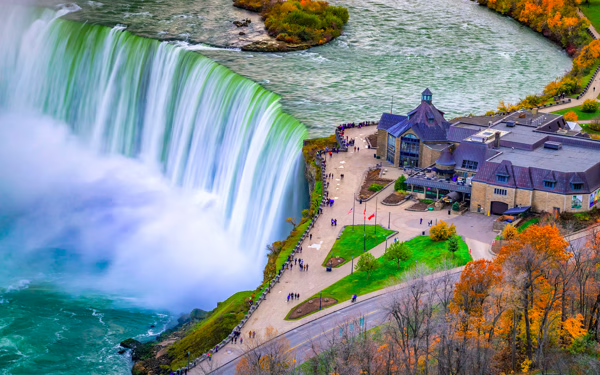
Niagara Falls is one of Canada’s most famous attractions.
Summer gives you the fullest experience with boat tours and warm weather.
But autumn adds another layer with colourful foliage.
Early morning visits are often more peaceful.
Vancouver
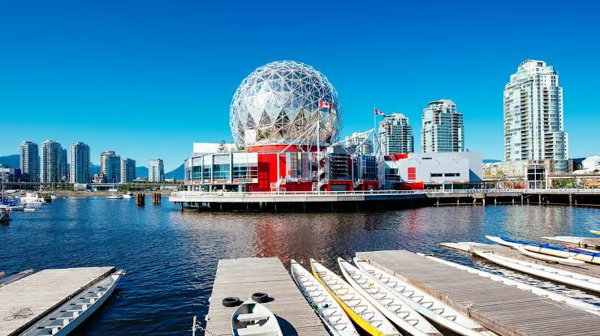
Vancouver is one of the easiest Canadian cities to combine with nature.
You can move quickly between:
- City neighbourhoods
- Beaches
- Mountains
- Parks
- Scenic drives
Summer is particularly strong, but late spring and early autumn are excellent too.
Banff National Park
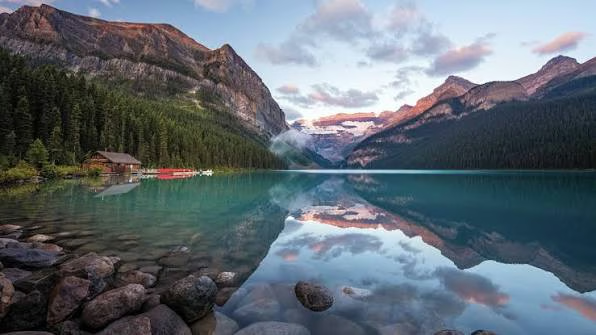
Banff is one of the most iconic destinations in Canada.
Expect:
- Turquoise lakes
- Mountain roads
- Hiking trails
- Wildlife
- Scenic viewpoints
Summer is the easiest season for a first visit.
Lake Louise
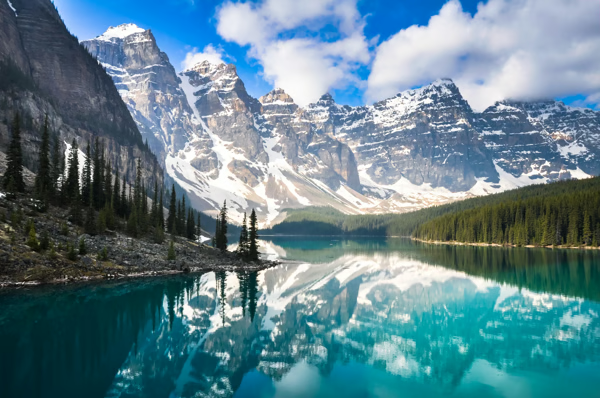
Lake Louise is one of Canada’s most photographed places.
Its turquoise colour comes from glacial sediment in the water.
Peak summer is beautiful, but also crowded.
Arrive early or use official shuttle systems where required.
Atlas Insider Tip
If you’re visiting Banff in summer, don’t assume you can simply drive to every famous lake whenever you want.
Parking restrictions and shuttle systems can change.
Check official access information before each major attraction.
A little planning can save hours.
Moraine Lake
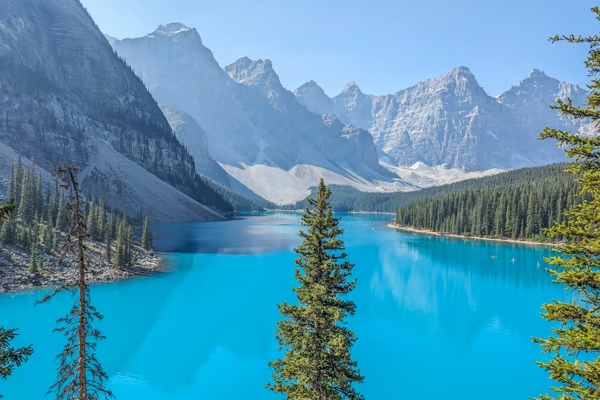
Moraine Lake is another iconic Rockies destination.
Access is often tightly managed because of its popularity.
Always check current transport rules in advance.
Do not leave this decision until the morning of your visit.
Jasper National Park
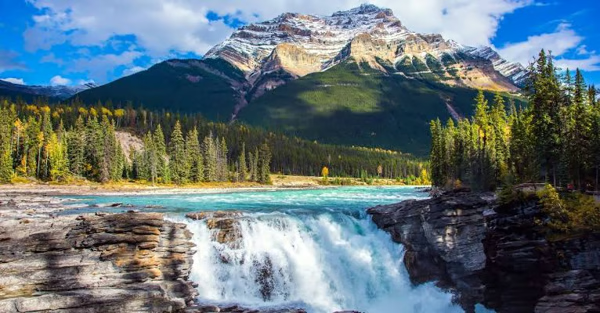
Jasper feels quieter and more spacious than Banff.
It is excellent for:
- Scenic drives
- Wildlife
- Dark-sky experiences
- Mountain lakes
- Hiking
It pairs beautifully with Banff via the Icefields Parkway.
Icefields Parkway
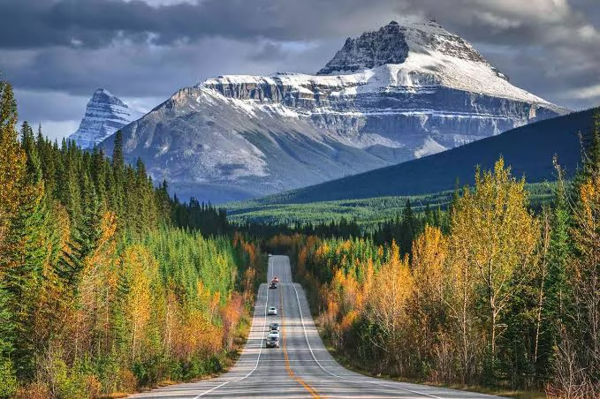
The Icefields Parkway is one of the world’s great scenic roads.
It connects Banff and Jasper through mountains, glaciers, lakes and waterfalls.
Do not rush it.
The route is part of the destination.
Montreal

Montreal offers a different side of Canada.
It blends North American energy with strong French influence.
Highlights include:
- Old Montreal
- Food
- Festivals
- Architecture
- Café culture
Autumn is especially beautiful.
Quebec City
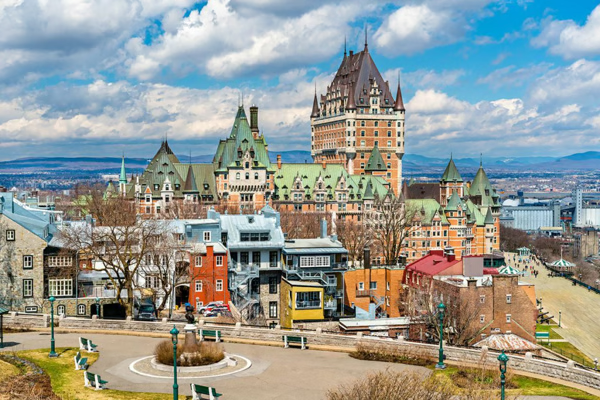
Quebec City feels more European than most North American cities.
Its old town, stone buildings and winter atmosphere make it especially distinctive.
It is beautiful in both autumn and winter.
Autumn Colours in Canada
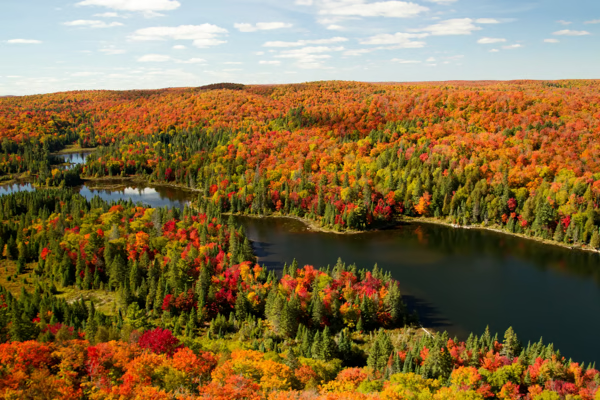
Canada’s fall foliage is one of the strongest reasons to visit in September and October.
Popular areas include:
- Ontario
- Quebec
- Eastern Canada
- Parts of the Rockies
Peak colour timing varies by region and weather.
Never rely on one exact date.
Skiing in Canada

Canada is one of the world’s premier ski destinations.
Popular areas include:
- Whistler
- Banff
- Lake Louise
- Revelstoke
- Mont-Tremblant
Winter conditions vary by resort, so always check seasonal snow reports.
Canada for Families
Canada works extremely well for families.
Good options include:
- Toronto
- Niagara Falls
- Vancouver
- Banff
- Quebec City
The country’s infrastructure makes self-drive travel relatively easy in many regions.
Canada for Honeymooners
Canada is ideal for couples who prefer nature and scenic travel.
A trip might combine:
Vancouver → Whistler → Banff → Jasper
or
Toronto → Niagara → Montreal → Quebec City
Both offer very different experiences.
What Should You Eat in Canada?
Try:
Poutine
Fries topped with cheese curds and gravy.
Maple Products
Maple syrup, candy and desserts are everywhere.
Butter Tarts
A classic Canadian sweet.
Nanaimo Bars
A layered no-bake dessert from British Columbia.
Vegetarian Travel in Canada
Vegetarian and vegan travel is very easy.
Major cities have excellent plant-based food scenes.
Even smaller tourist towns usually offer options.
How Many Days Do You Need in Canada?
5 to 7 Days
One city + nearby region
10 Days
One major region
12 to 14 Days
Ideal for a broader first trip
3 Weeks+
Enough to combine eastern and western Canada comfortably
For most travellers, 10 to 14 days works best if you focus on one side of the country.
Travel Tips Before You Go
- Plan by region, not by country.
- Don’t underestimate domestic travel distances.
- Book national-park stays early.
- Check seasonal road access.
- Use official shuttle systems where required.
- Carry layers.
- Respect wildlife distances.
- Travel in June or September for a strong balance.
- Avoid trying to combine both coasts in one short trip.
Quick Summary
| Travel Goal | Best Time |
|---|---|
| Overall Best Time | May-June, September-October |
| Banff & Jasper | June-September |
| Toronto | May-June, September-October |
| Vancouver | May-September |
| Niagara Falls | May-October |
| Autumn Colours | Late September-October |
| Skiing | December-March |
| Road Trips | June-October |
Frequently Asked Questions
What is the best month to visit Canada?
For most first-time travellers, June and September offer excellent weather and strong access to major attractions.
How many days are enough for Canada?
Around 10 to 14 days works well if you focus on one major region.
Is Canada expensive?
Yes. Accommodation, domestic travel and popular national-park regions can be costly during peak season.
Is Canada good for families?
Absolutely. The country offers strong infrastructure, scenic road trips and family-friendly cities.
Canada or Switzerland?
Choose Canada for bigger landscapes, wildlife and long road trips.
Choose Switzerland for compact alpine travel, scenic trains and easier point-to-point transport.
When is the best time for autumn colours?
Late September through October is often strongest, depending on region and weather.
Continue Exploring on Mindflix Atlas
- Best Time to Visit New Zealand
- Best Time to Visit Norway
- Best Time to Visit Switzerland
- Best Time to Visit Iceland
- Best Time to Visit Every Country
- Canada Travel Guide (Coming Soon)
- Banff & Jasper Travel Guide (Coming Soon)
- The Perfect Canada Road Trip (Coming Soon)
- Canada vs Switzerland (Coming Soon)
- Best Autumn Destinations in the World (Coming Soon)
Canada is not a country you rush across.
It is too big for that.
Choose a region.
Stay longer.
Drive slower.
Stop for the lake you didn’t plan to see.
Because in Canada, the places between the famous attractions are often what you remember most.
Mindflix Atlas helps you understand the destination before you book it, so you can travel smarter and experience more.