
Best Time to Visit Norway: Fjords, Northern Lights & Month-by-Month Guide (2026)
Jay Vora
Founder & CEO
Best Time to Visit Norway
Norway is a destination built around nature.
Fjords cut deep into the landscape.
Waterfalls tumble from cliffs.
Roads twist between mountains and lakes.
Fishing villages sit beneath dramatic peaks.
And in the far north, the sky itself becomes part of the journey.
In summer, the sun barely sets.
In winter, travellers head north hoping to see the Northern Lights.
For most first-time visitors, May to September is the best time to explore Norway’s fjords, scenic roads and cities.
But if the Northern Lights are your priority, winter is the season you want.
The best time depends completely on the experience you are chasing.
Understanding Norway’s Seasons
Norway has four distinct seasons, but geography changes everything.
Southern cities such as Oslo have different conditions from Bergen.
The fjord region has its own weather patterns.
Northern Norway can remain snowy long after the south has entered spring.
That means checking regional conditions is essential.
Spring in Norway: March to May
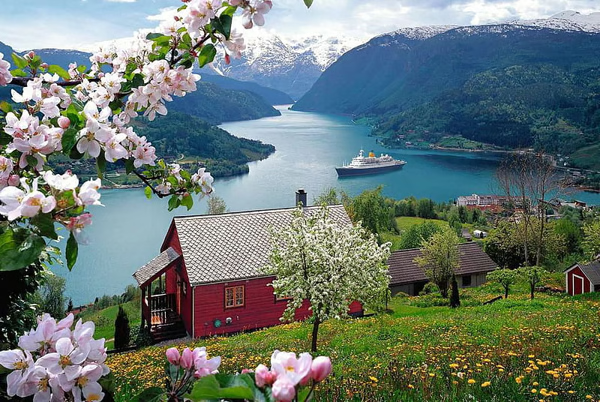
Spring arrives slowly.
March still feels wintry in many areas.
By April, days become noticeably longer.
May is when Norway starts opening up properly for road trips and outdoor travel.
Spring is ideal for:
- Fjords
- Fewer crowds
- Waterfalls
- Photography
- City breaks
- Early road trips
May is especially attractive because melting snow feeds dramatic waterfalls.
Summer in Norway: June to August
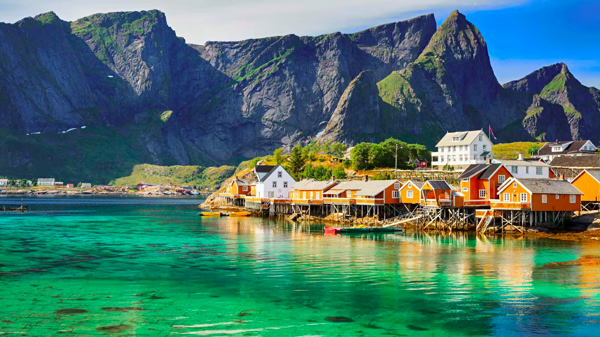
Summer is peak Norway.
Days are extremely long.
In northern regions, the sun may not set at all.
Roads are open.
Mountain routes become accessible.
Cruises run frequently.
This is the best period for:
- Fjords
- Road trips
- Hiking
- Scenic trains
- Cruises
- Family travel
- Midnight sun
The trade-off is higher prices and more tourists.
Autumn in Norway: September to November
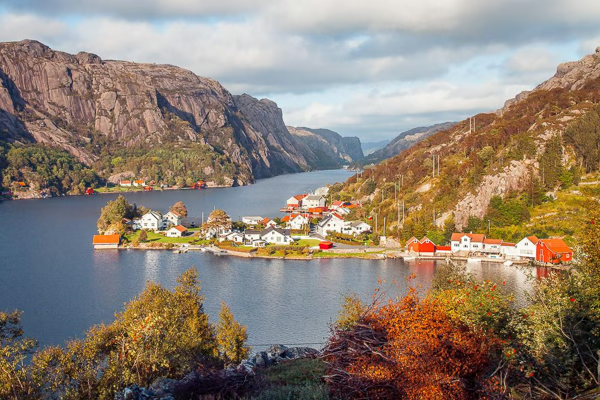
September is one of the best months for travellers who want fewer crowds.
The weather is still relatively mild in many regions.
By October, autumn colours deepen and daylight decreases quickly.
November becomes much colder.
Autumn is good for:
- Photography
- Quieter travel
- City breaks
- Early Northern Lights trips in the north
Winter in Norway: December to February
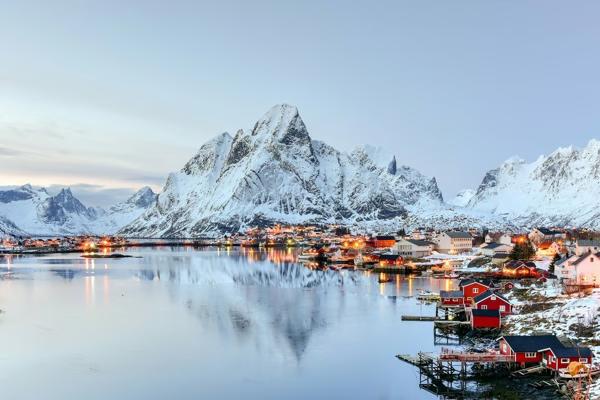
Winter transforms Norway.
Northern regions become centres for Arctic experiences.
Expect:
- Snow
- Dog sledding
- Northern Lights tours
- Winter cruises
- Skiing
- Polar-night atmosphere
Winter is ideal for travellers seeking something completely different from a summer fjord journey.
Norway Month by Month
January
Deep winter.
Northern Norway is dark, cold and atmospheric.
Best for: Northern Lights, snow experiences and Arctic travel.
February
Winter continues, but daylight gradually increases.
This is a strong month for Northern Lights and snow activities.
March
One of the best winter months.
Longer daylight, good snow conditions and Arctic activities combine well.
April
Spring begins arriving in southern Norway.
Some mountain roads remain closed.
Cities become more comfortable.
May
One of Norway’s best shoulder-season months.
Fjords become beautiful, waterfalls are powerful and crowds remain manageable.
June
Summer begins.
Long daylight hours create ideal conditions for road trips and fjord travel.
July
Peak summer.
This is one of the busiest months.
Expect excellent access to outdoor attractions.
August
Still a strong summer month.
Conditions remain good for hiking and scenic travel.
September
A fantastic month for fewer crowds.
Autumn colours begin and northern regions may start offering Northern Lights opportunities.
October
Cooler and darker.
Some mountain routes may begin closing depending on conditions.
November
Winter returns.
Northern Lights travel becomes more popular.
December
Festive season, snow and Arctic experiences dominate.
A magical month for winter travel.
Best Time Based on Your Travel Style
First-Time Visit
May to September
Fjords
May to September
Northern Lights
September to March
Midnight Sun
Late May to July, depending on region
Road Trips
June to September
Hiking
June to September
Photography
May, September, winter in the north
Fewer Crowds
May and September
Oslo
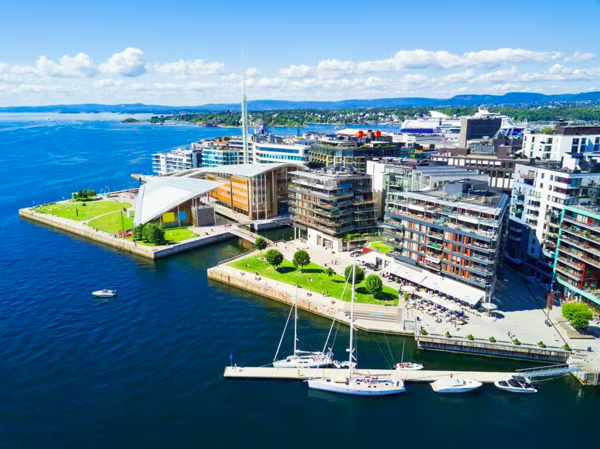
Oslo is clean, modern and relaxed.
It combines culture with easy access to nature.
Highlights include:
- Oslo Opera House
- Vigeland Sculpture Park
- Aker Brygge
- Munch Museum
- Oslofjord
Two days is often enough for a first visit.
Bergen
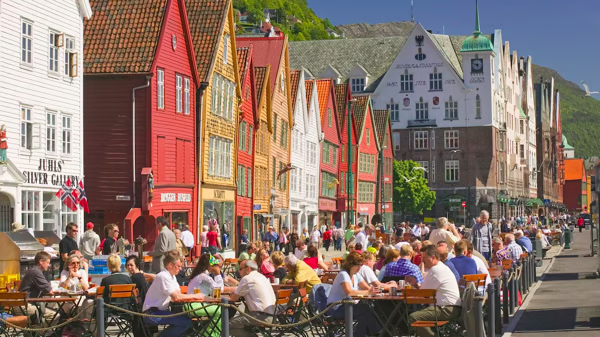
Bergen is the gateway to Norway’s fjord region.
It is colourful, compact and surrounded by mountains.
Highlights include:
- Bryggen
- Fløibanen
- Fish Market
- Fjord excursions
Bergen is also famously rainy.
Carry a waterproof layer regardless of season.
The Fjords
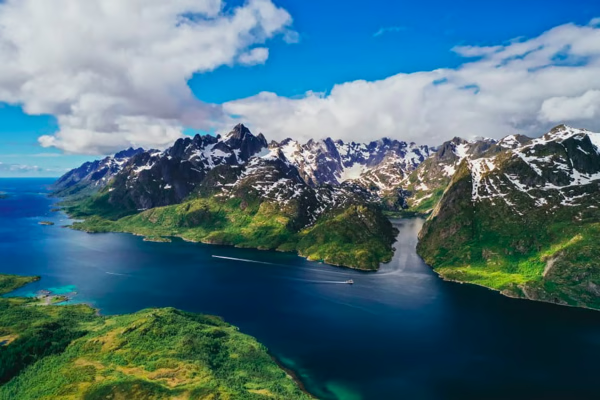
Norway’s fjords are the reason many travellers come.
The most famous include:
- Geirangerfjord
- Nærøyfjord
- Sognefjord
- Hardangerfjord
The experience is not only about the water.
It’s the combination of cliffs, waterfalls, villages and mountain roads.
Atlas Insider Tip
If your trip is centred around Norway’s fjords, don’t stay in only one city.
Move through the landscape.
A combination like:
Oslo → Flåm → Bergen → Fjord region
will usually feel much richer than repeatedly taking long day trips from one base.
In Norway, the journey between destinations is often the highlight.
Flåm Railway
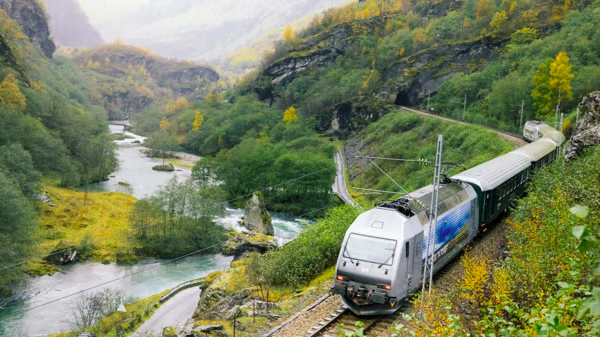
The Flåm Railway is one of Norway’s most famous train journeys.
It travels through dramatic mountain scenery between Flåm and Myrdal.
Expect:
- Waterfalls
- Steep valleys
- Mountain views
Book early in summer.
Geirangerfjord
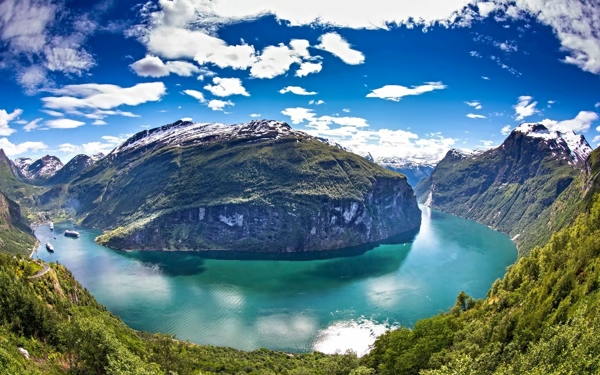
Geiranger is one of Norway’s most photographed fjords.
Cruises pass waterfalls and sheer mountains.
Road viewpoints around the area can be just as spectacular as the water journey itself.
Trollstigen
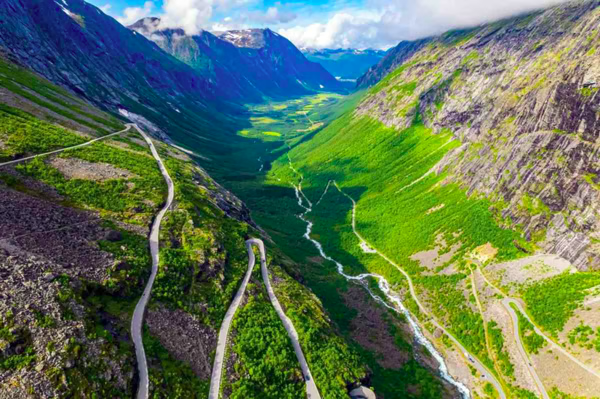
Trollstigen is one of Norway’s most dramatic mountain roads.
It features steep bends, waterfalls and mountain viewpoints.
Seasonal closures are common in winter, so always check road status before travelling.
Lofoten Islands
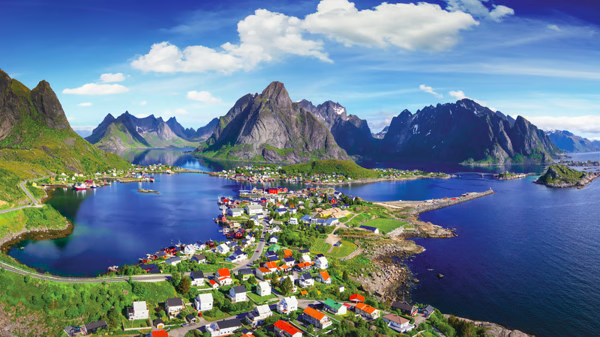
Lofoten is one of Norway’s most striking regions.
Jagged mountains rise directly from the sea.
Fishing villages sit beside beaches.
In winter, the Northern Lights may appear above snowy peaks.
In summer, the midnight sun changes the entire rhythm of the day.
Tromsø
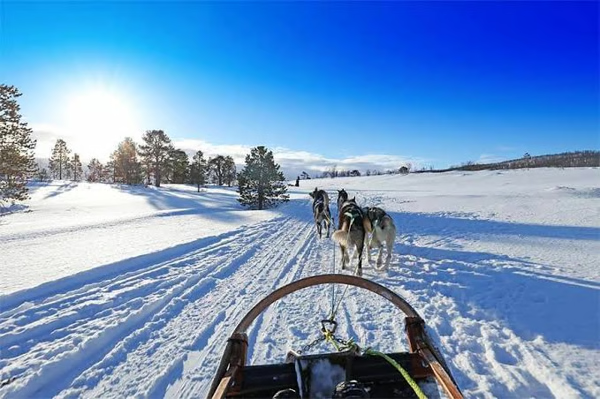
Tromsø is one of the best-known bases for Arctic travel.
Winter visitors come for:
- Northern Lights
- Dog sledding
- Snowmobiling
- Reindeer experiences
- Winter cruises
Summer brings the midnight sun.
Northern Lights
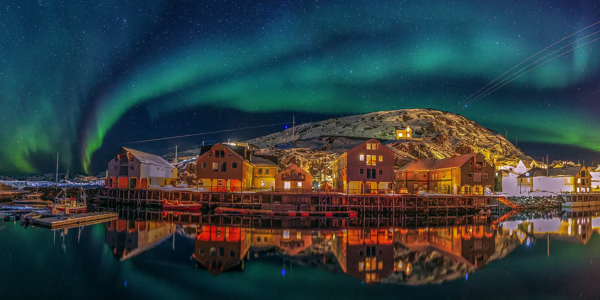
Seeing the Northern Lights is never guaranteed.
That is important.
Clear skies, darkness and solar activity all matter.
For the best chance:
- Stay several nights
- Travel north
- Avoid city lights
- Keep your schedule flexible
- Use reputable guides
Treat the lights as a natural phenomenon, not a scheduled performance.
Midnight Sun
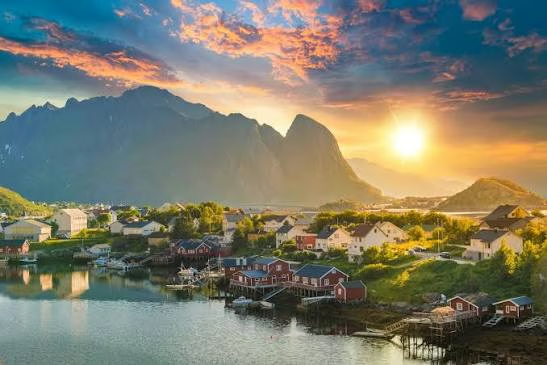
In northern Norway, the sun remains above the horizon for extended periods during summer.
This creates a surreal travel experience.
You can hike late at night.
Drive in daylight at midnight.
Eat dinner while the sun is still shining.
It completely changes how you experience time.
Norway Road Trips
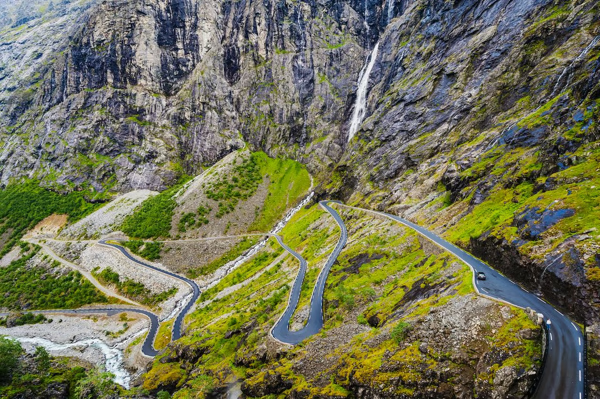
Norway is one of Europe’s great driving destinations.
Popular scenic roads include:
- Atlantic Ocean Road
- Trollstigen
- Hardanger routes
- Lofoten drives
Driving gives you flexibility.
But distances can be deceptive.
Mountain roads are slow.
Ferries take time.
Weather changes.
Do not overload your itinerary.
Norway by Cruise
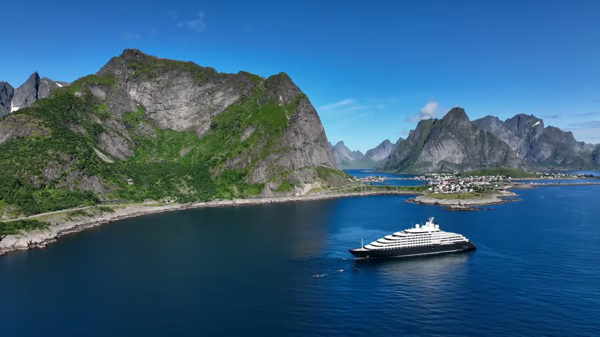
Cruising is another popular way to experience the coast and fjords.
A cruise allows you to see landscapes without changing hotels every night.
However, independent travellers may prefer more control through trains, cars and ferries.
The best option depends on pace and travel style.
Norway for Honeymooners
Norway can be an exceptional honeymoon destination for couples who prefer nature and adventure.
You can combine:
- Fjord hotels
- Scenic trains
- Mountain cabins
- Northern Lights
- Arctic lodges
It feels very different from a traditional beach honeymoon.
What Should You Eat in Norway?
Norwegian cuisine reflects its geography.
Try:
Salmon
Fresh and widely available.
Fish Soup
Creamy seafood soups are common along the coast.
Brunost
Norway’s distinctive brown cheese.
Sweet, caramel-like and unusual.
Waffles
Often served with jam or brown cheese.
Vegetarian Travel in Norway
Vegetarian travel is straightforward in cities and larger towns.
Restaurants commonly offer vegetarian options.
In remote regions, choices may be more limited.
Planning ahead is useful.
How Many Days Do You Need in Norway?
4 to 5 Days
Oslo + Bergen
7 Days
Cities + one fjord region
10 Days
Ideal for a scenic first trip
12 to 14 Days
Excellent for road trips or adding northern Norway
2 Weeks+
Allows a broader fjords + Arctic combination
For most first-time visitors, 9 to 12 days works very well.
Travel Tips Before You Go
- Pack waterproof clothing.
- Do not underestimate driving times.
- Book scenic trains early in summer.
- Check mountain-road closures.
- Keep Northern Lights plans flexible.
- Spend several nights in Arctic regions.
- Use layers even in summer.
- Expect higher travel costs.
- Keep some free time for weather changes.
Quick Summary
| Travel Goal | Best Time |
|---|---|
| Overall Best Time | May-September |
| Fjords | May-September |
| Northern Lights | September-March |
| Midnight Sun | Late May-July |
| Road Trips | June-September |
| Hiking | June-September |
| Fewer Crowds | May, September |
| Arctic Winter | December-March |
Frequently Asked Questions
What is the best month to visit Norway?
For a classic fjord trip, June and September are excellent choices.
When can I see the Northern Lights in Norway?
The main viewing season is generally from September to March, especially in northern regions.
How many days are enough for Norway?
Around 9 to 12 days works well for a first trip combining cities, trains and fjords.
Is Norway expensive?
Yes. Norway is one of Europe’s more expensive destinations, especially for food, accommodation and transport.
Is Norway good for honeymooners?
Absolutely. It suits couples who prefer scenery, road trips, cabins and outdoor experiences over resort-style travel.
Norway or Switzerland?
Choose Norway for fjords, Arctic landscapes, coastal drives and Northern Lights.
Choose Switzerland for alpine villages, mountain trains and compact transport networks.
Both are spectacular.
Continue Exploring on Mindflix Atlas
- Best Time to Visit Switzerland
- Best Time to Visit Italy
- Best Time to Visit Greece
- Best Time to Visit Every Country
- Norway Travel Guide (Coming Soon)
- Northern Lights Guide (Coming Soon)
- The Perfect 10-Day Norway Itinerary (Coming Soon)
- Norway vs Switzerland (Coming Soon)
- Best Scenic Train Journeys in Europe (Coming Soon)
Norway is one of those places where the route matters as much as the destination.
You remember the road around the fjord.
The train disappearing into the mountains.
The ferry crossing under a waterfall.
The midnight sunlight.
The silent wait for the Northern Lights.
Travel slowly enough, and Norway starts to feel less like a country you toured and more like a landscape you moved through.
Mindflix Atlas helps you understand the destination before you book it, so you can travel smarter and experience more.