
Best Time to Visit Iceland: Northern Lights, Road Trips & Month-by-Month Guide (2026)
Jay Vora
Founder & CEO
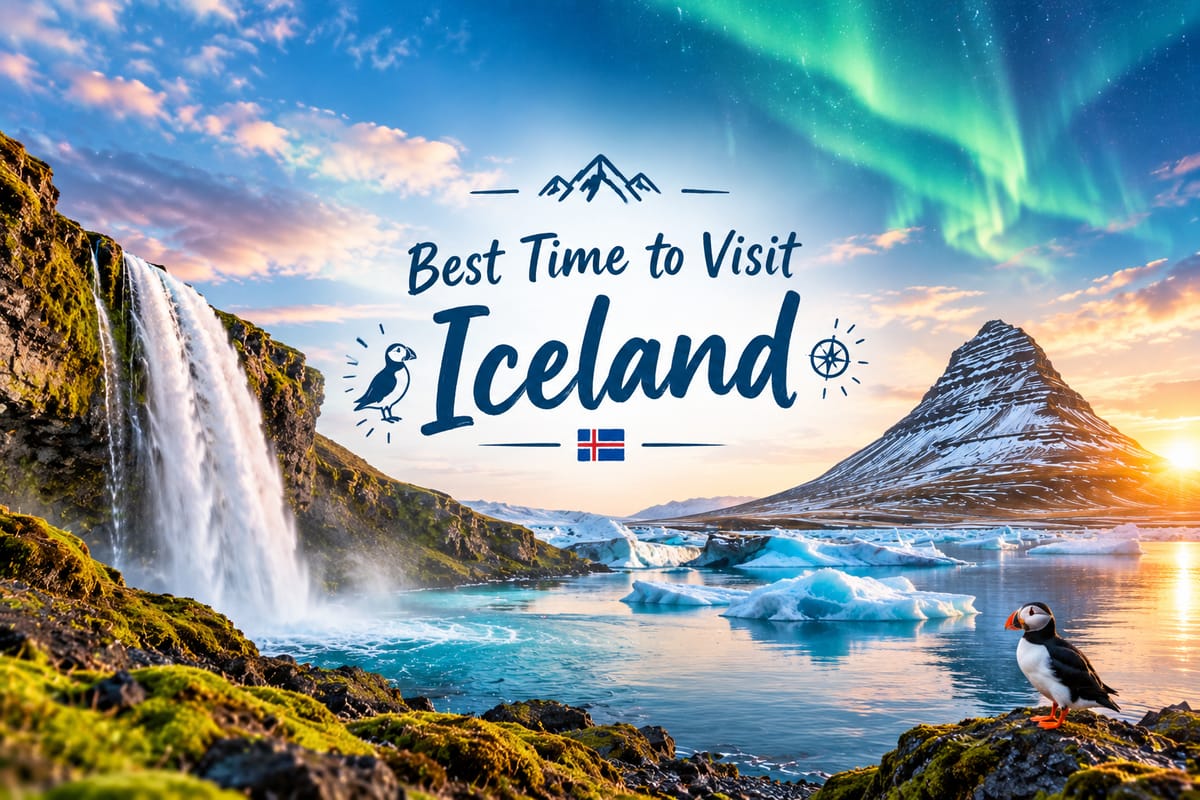
Best Time to Visit Iceland
Iceland feels like a country designed by nature with no interest in being subtle.
Waterfalls crash beside highways.
Glaciers stretch toward black-sand beaches.
Steam rises from the ground.
Volcanoes shape the landscape.
And in winter, the sky may suddenly turn green.
The best time to visit Iceland depends entirely on what you want to see.
For road trips, long daylight hours and easier driving, June to September is generally the strongest period.
For Northern Lights, September to March gives you the darkness you need.
There is no single best season.
There are simply different versions of Iceland.
Understanding Iceland’s Seasons
Iceland’s weather is famously unpredictable.
You can experience sun, wind, rain and cold within the same day.
That means one important rule applies year-round:
Dress for change.
Broadly, the year looks like this:
- Summer: June to August
- Autumn: September to October
- Winter: November to March
- Spring: April to May
Summer in Iceland: June to August
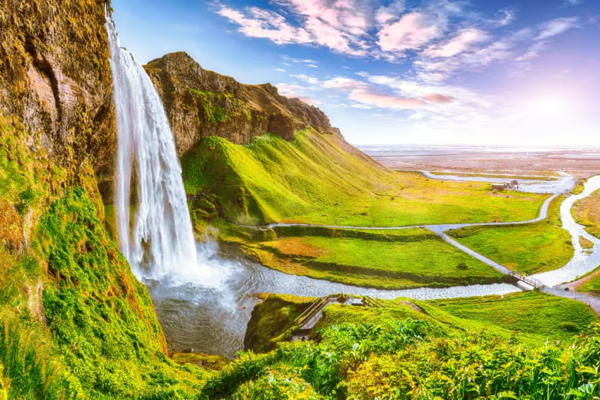
Summer is the easiest time for a classic first trip.
The days are incredibly long.
Road access is much better.
Mountain routes open.
Driving becomes easier.
This is the best time for:
- Ring Road trips
- Waterfalls
- Hiking
- Highlands
- Midnight sun
- Whale watching
- Camping
The trade-off is higher prices and more visitors.
Autumn in Iceland: September to October
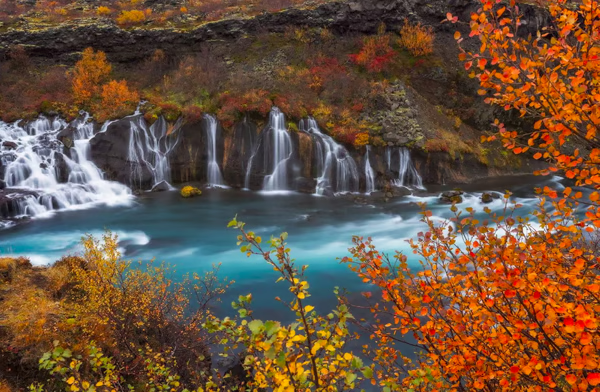
Autumn gives you an excellent balance.
Daylight is still usable.
Tourist crowds begin reducing.
And Northern Lights season starts returning.
September is especially strong for travellers who want both road-trip freedom and aurora chances.
Winter in Iceland: November to March
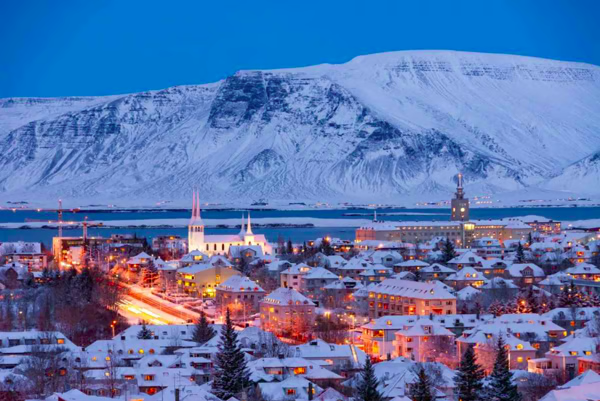
Winter is dramatic.
Days are short.
Weather can be difficult.
Road conditions can change quickly.
But the rewards are extraordinary.
Winter is best for:
- Northern Lights
- Ice caves
- Snowy landscapes
- Geothermal experiences
- Winter photography
This season requires flexibility.
Spring in Iceland: April to May
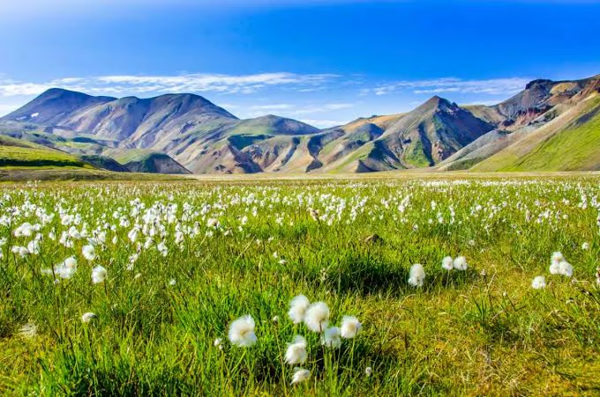
Spring is transitional.
Snow begins melting.
Days become much longer.
Road conditions improve.
Crowds remain lighter than peak summer.
May is one of the most underrated months for first-time visitors.
Iceland Month by Month
January
Deep winter.
Expect short daylight hours, snow and excellent Northern Lights potential.
Best for: Aurora, winter landscapes, geothermal experiences.
February
Still wintry, but daylight begins increasing.
A strong month for ice caves and aurora hunting.
March
One of the best winter months.
You get more daylight while keeping solid Northern Lights opportunities.
April
Spring begins.
Conditions are still variable, but road travel becomes easier.
A good shoulder-season month.
May
Excellent for fewer crowds and long daylight hours.
Some highland roads remain closed, but major routes are much easier.
June
Peak daylight.
Around the summer solstice, darkness is minimal.
This is ideal for long road-trip days.
July
One of the busiest months.
Weather is relatively mild and road access is excellent.
August
Still a strong summer month.
Toward the end of August, nights begin returning.
September
One of Iceland’s best all-round months.
Road conditions are still manageable and Northern Lights season begins again.
October
Cooler and darker.
Aurora chances improve, but weather becomes less predictable.
November
Winter returns.
Short days and snow become more common.
December
A beautiful festive period.
Expect very limited daylight and strong winter conditions.
Best Time Based on Your Travel Style
First-Time Visit
June to September
Northern Lights
September to March
Ring Road
June to September
Highlands
July to September, depending on road openings
Waterfalls
May to September
Ice Caves
Typically winter season
Midnight Sun
June to July
Photography
September, March, summer and winter all offer different strengths
Reykjavik
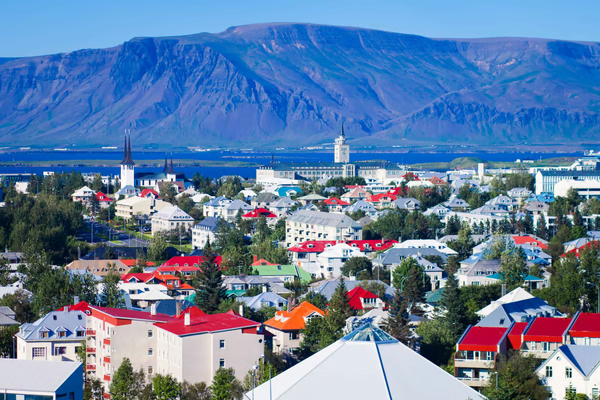
Reykjavik is compact, creative and easy to explore.
Highlights include:
- Hallgrímskirkja
- Harpa
- Old Harbour
- Cafés
- Geothermal pools
- Restaurants
Most travellers need only one or two nights before heading into the countryside.
The Golden Circle
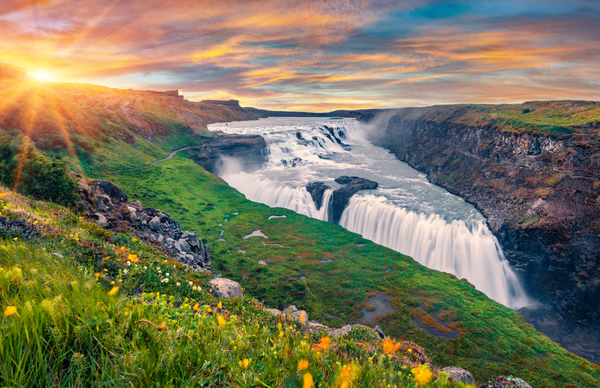
The Golden Circle is one of Iceland’s most popular routes.
It usually includes:
- Þingvellir National Park
- Geysir geothermal area
- Gullfoss waterfall
It works well as a day trip from Reykjavik.
But if you have a car, continuing beyond the standard route can make the experience feel less crowded.
South Coast
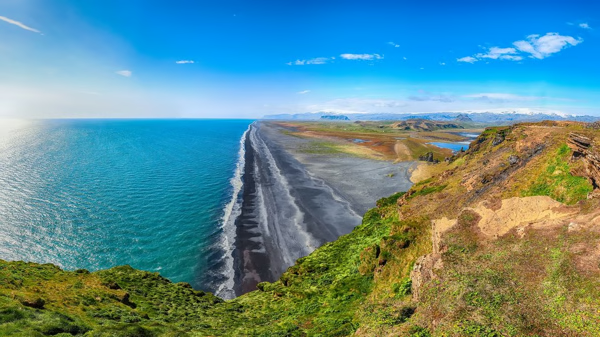
The South Coast is one of Iceland’s best road-trip regions.
Highlights include:
- Seljalandsfoss
- Skógafoss
- Reynisfjara
- Vík
- Glaciers
- Black-sand beaches
It’s a perfect introduction to the country.
Atlas Insider Tip
If you’re driving Iceland yourself, never plan every day to the minute.
Weather changes fast.
Road conditions change.
A route that looks easy on a map may take longer than expected.
Leave buffer time.
In Iceland, flexibility is not optional.
It is part of smart travel.
Northern Lights
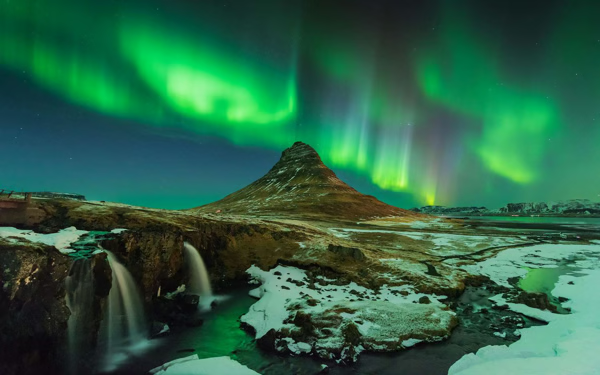
Seeing the aurora is never guaranteed.
You need:
- Darkness
- Clear skies
- Solar activity
- Patience
The best strategy is to stay several nights and keep your schedule flexible.
Do not book a one-night trip expecting certainty.
Midnight Sun
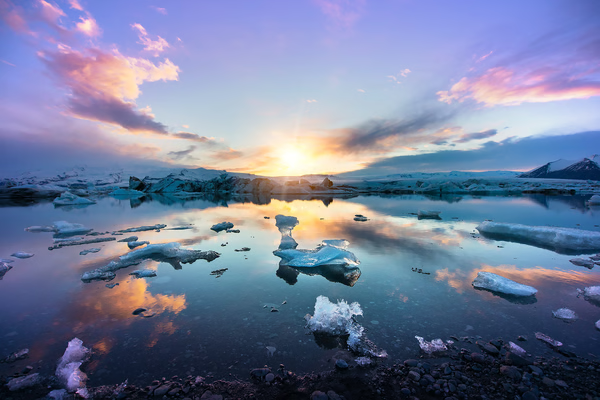
Summer changes the rhythm of Iceland completely.
You can drive late into the evening.
Hike after dinner.
Visit popular sights when crowds have already left.
That extra daylight is one of summer’s biggest advantages.
Blue Lagoon and Geothermal Pools

Iceland’s geothermal bathing culture is a major part of the experience.
The Blue Lagoon is the most famous option, but it’s not the only one.
Other pools and geothermal spas can feel more local and less crowded.
Book popular ones in advance.
Ring Road

Iceland’s Ring Road circles much of the country.
A full loop generally deserves at least 8 to 10 days.
More is better.
Trying to complete it too quickly means too much driving and not enough experiencing.
Waterfalls
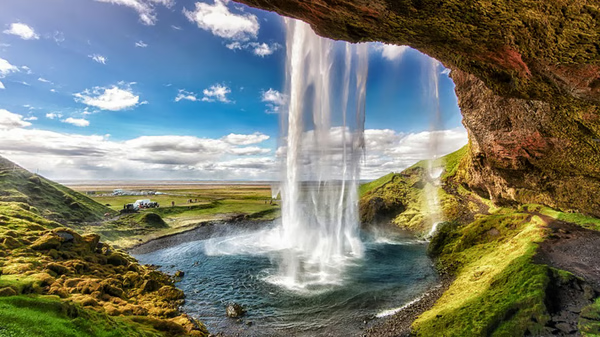
Iceland has an extraordinary number of waterfalls.
Some are famous.
Others appear unexpectedly beside the road.
That’s part of the magic.
Popular examples include:
- Gullfoss
- Skógafoss
- Seljalandsfoss
- Dettifoss
- Goðafoss
Glaciers
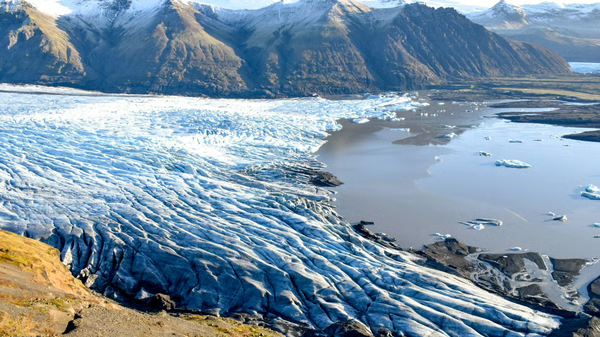
Glaciers are another defining feature.
Visitors can experience them through:
- Guided glacier walks
- Ice caves
- Glacier lagoons
- Scenic drives
Never walk on a glacier without proper guidance.
Conditions can be dangerous.
Jökulsárlón Glacier Lagoon
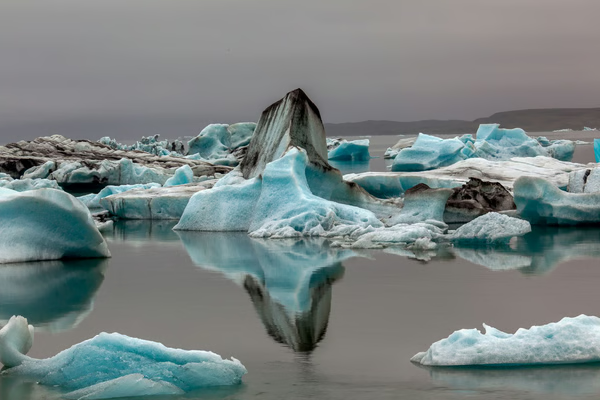
Jökulsárlón is one of Iceland’s most memorable landscapes.
Icebergs float across the lagoon before drifting toward the sea.
Nearby, Diamond Beach is famous for pieces of ice scattered across black sand.
This area deserves time.
Iceland for Couples
Iceland is excellent for couples who prefer adventure over resort travel.
You can combine:
- Road trips
- Geothermal spas
- Northern Lights
- Boutique stays
- Remote landscapes
It feels intimate because the landscape itself creates the experience.
Iceland for Families
Families can enjoy Iceland too, especially during summer.
Popular family-friendly experiences include:
- Waterfalls
- Geothermal pools
- Whale watching
- Easy scenic drives
Avoid overloading each day with long distances.
What Should You Wear in Iceland?
Layers.
Always.
Pack:
- Waterproof jacket
- Windproof outer layer
- Warm mid-layer
- Thermal base layer in winter
- Comfortable waterproof shoes
- Gloves and hat outside summer
Even summer can feel cold and windy.
What Should You Eat in Iceland?
Try:
Icelandic Lamb
A traditional staple.
Skyr
A thick dairy product similar to yoghurt.
Fish Soup
Common and warming, especially in colder weather.
Rye Bread
Often baked using geothermal heat in certain regions.
Vegetarian Travel in Iceland
Vegetarian travel is straightforward in Reykjavik and major tourist areas.
Remote regions may offer fewer options, so planning ahead helps.
How Many Days Do You Need in Iceland?
4 to 5 Days
Reykjavik + Golden Circle + South Coast
7 Days
Excellent for South Coast + major highlights
8 to 10 Days
Ring Road at a faster pace
10 to 14 Days
Ideal for Ring Road with proper breathing room
For most first-time travellers, 7 to 10 days works very well.
Travel Tips Before You Go
- Check road conditions daily.
- Never underestimate Icelandic wind.
- Carry proper waterproof clothing.
- Keep your itinerary flexible.
- Book accommodation early in summer.
- Don’t chase the Northern Lights alone in dangerous weather.
- Avoid stopping randomly on narrow roads for photos.
- Use official parking areas.
- Never enter closed roads or restricted areas.
- Respect changing weather.
Quick Summary
| Travel Goal | Best Time |
|---|---|
| Overall Best Time | June-September |
| Northern Lights | September-March |
| Ring Road | June-September |
| Midnight Sun | June-July |
| Ice Caves | Winter |
| Waterfalls | May-September |
| Fewer Crowds | May, September |
| Winter Landscapes | December-March |
Frequently Asked Questions
What is the best month to visit Iceland?
For most first-time visitors, June and September are excellent choices.
When can I see the Northern Lights?
The main viewing season is generally from September to March.
How many days are enough for Iceland?
Around 7 to 10 days works very well for a first trip.
Is Iceland expensive?
Yes. Accommodation, food, car rental and tours can be costly.
Is Iceland good for honeymooners?
Absolutely, especially for couples who enjoy road trips, nature and unusual experiences.
Iceland or Norway?
Choose Iceland for volcanic landscapes, waterfalls, black-sand beaches and compact road trips.
Choose Norway for fjords, scenic trains, coastal villages and a larger range of long-distance travel routes.
Both are outstanding.
Continue Exploring on Mindflix Atlas
- Best Time to Visit Norway
- Best Time to Visit Switzerland
- Best Time to Visit Every Country
- Iceland Travel Guide (Coming Soon)
- Northern Lights Guide (Coming Soon)
- The Perfect 8-Day Iceland Road Trip (Coming Soon)
- Iceland vs Norway (Coming Soon)
- Best Road Trips in Europe (Coming Soon)
Iceland is the kind of destination that reminds you how small you are.
The wind decides the pace.
The weather decides the route.
The landscape decides when you stop.
And somehow, that lack of control becomes part of the experience.
Travel with flexibility, respect the conditions and leave space for the unexpected.
Mindflix Atlas helps you understand the destination before you book it, so you can travel smarter and experience more.